

Bottom-ported MEMS microphones are increasingly popular in compact consumer electronics, wearables, and IoT devices. Unlike top-ported designs—where sound enters through a hole on the package’s surface—bottom-ported microphones capture acoustic signals through an opening on the underside of the package. This configuration offers unique advantages and design considerations.

How Bottom-Ported MEMS Microphones Work
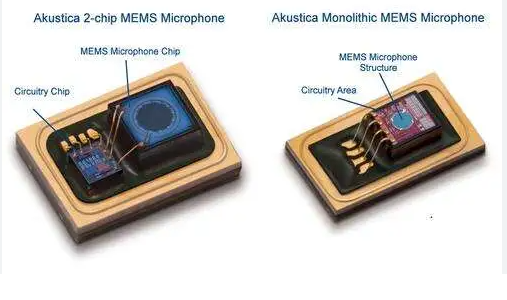
A bottom-ported MEMS microphone houses its acoustic inlet on the PCB-facing side of the package. Sound travels through a dedicated via in the PCB before reaching the microphone’s diaphragm. On-chip, a piezo-resistive or capacitive sensor converts diaphragm movement into an electrical signal, which is then digitized by the integrated ADC (PDM or I²S).
Key Advantages
- Smaller Footprint
– Eliminates the need for a PCB cutout directly beneath the microphone can, enabling tighter layouts. - Improved Package Protection
– The acoustic port faces the PCB, shielding it from direct contamination (dust, debris) on the device surface. - Uniform Acoustic Field
– Allows tuning of the acoustic path length via PCB hole design, optimizing frequency response.
Design Considerations
- PCB Via Quality
Ensure the via diameter and plating process minimize acoustic damping and resonance peaks. - Acoustic Enclosure
Use an acoustic back volume or damping material beneath the PCB to smooth low-frequency response. - Sealing & Conformal Coating
If your device requires liquid protection, plan for selective conformal coating to protect the microphone inlet.
Typical Applications
- Wearable Devices (Smartwatches, Fitness Bands)
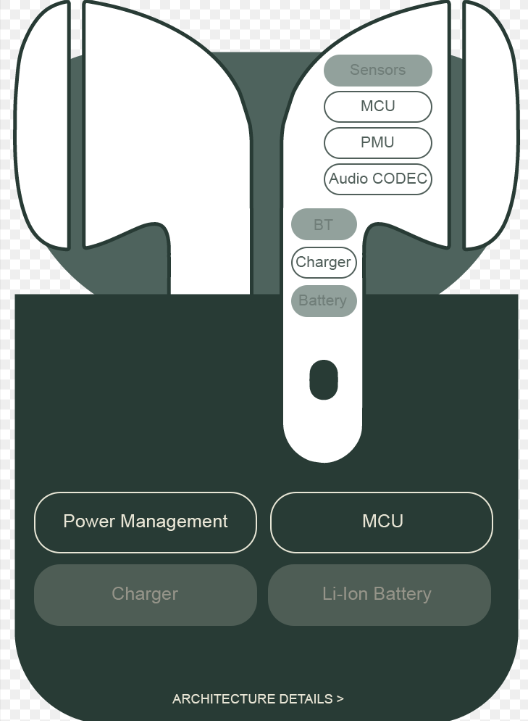
Bottom-ported designs preserve a sleek exterior while delivering clear voice pickup for calls and voice assistants. - True-Wireless Earbuds
Integration in multi-layer PCBs with minimal height constraints. - IoT Sensors & Smart Home
Discreet placement inside enclosures where surface mounting isn’t possible.
SISTC Bottom-Ported MEMS Microphone Options
Explore our full lineup of MEMS microphones—including both bottom- and top-ported models—on the SISTC MEMS Microphone Category. Our digital series supports PDM and I²S output, with SNR up to 64 dB and AOP to 130 dB SPL.
Further Reading
- Analog Devices: Acoustic Design for MEMS Microphones
- TDK InvenSense: MEMS Microphone Packaging Guide