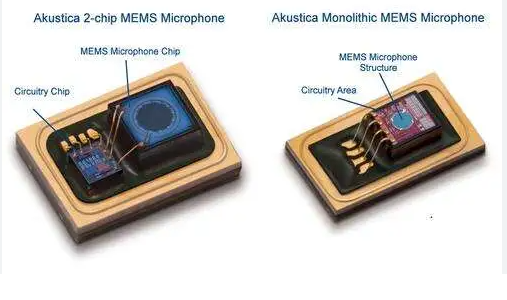


MEMS (Micro-Electro-Mechanical Systems) microphones have revolutionized audio capture in consumer, automotive, and industrial applications. A common question is: are MEMS microphones analog or digital? The answer depends on the on-chip signal processing architecture—but most modern MEMS microphones on the market deliver a digital output, simplifying system integration and improving noise immunity.

Analog vs. Digital MEMS Microphones
- Analog MEMS Microphones
- Output: Low-level analog voltage proportional to sound pressure.
- Requirements: External analog-front-end components such as anti-aliasing filters and ADCs (Analog-to-Digital Converters).
- Use Cases: Legacy audio systems or designs where custom analog processing is needed.
- Digital MEMS Microphones
- Output: Integrated ADC provides a PDM (Pulse Density Modulation) or I²S digital data stream.
- Advantages:
- EMI Immunity: Digitization at the die prevents analog noise pickup on PCB traces.
- Simplified BOM: Eliminates the need for external ADCs and filters.
- Consistent Calibration: Factory-trimmed performance ensures tight part-to-part variation.
- Use Cases: Smartphones, wearables, smart speakers, automotive voice control, and IoT sensors.
Key Interface Standards
- PDM (Pulse Density Modulation): One-bit data stream at a high clock rate; requires software decimation.
- I²S (Integrated Inter-IC Sound): Multi-bit serial audio with dedicated clock lines; lower firmware overhead.
Popular Digital MEMS Microphone Examples
- TDK InvenSense MEMS Microphone
Industry-leading devices known for high SNR and low power consumption. - Knowles Microphone
Offers both analog and digital MEMS options optimized for medical and mobile markets. - Infineon Microphone
Combines robust automotive-grade qualifications with digital interfaces.
Notable Part Numbers
- IMP34DT05 / MP34DT05TR
High-performance omnidirectional digital MEMS microphones featuring PDM output. - V2S200D
Though not a microphone, this MEMS gyroscope illustrates the broad MEMS sensor ecosystem.
Choosing the Right MEMS Microphone
When selecting between analog and digital MEMS microphones, consider:
- System Design Complexity: Digital mics reduce PCB routing and component count.
- Noise Environment: Digital outputs excel in high-EMI settings (automotive, industrial).
- Processing Resources: PDM requires onboard decimation filters; I²S passes PCM-ready data.
Explore SISTC’s complete range of digital MEMS microphones on our product category page.
Further Reading
- MEMS Microphone (Wikipedia): Overview of MEMS microphone technology and histories.
- Analog Devices: PDM vs. I²S Interfaces: Technical comparison of digital audio interfaces.
- STMicroelectronics: Digital Microphones Solutions: Comprehensive guide to digital MEMS microphones.