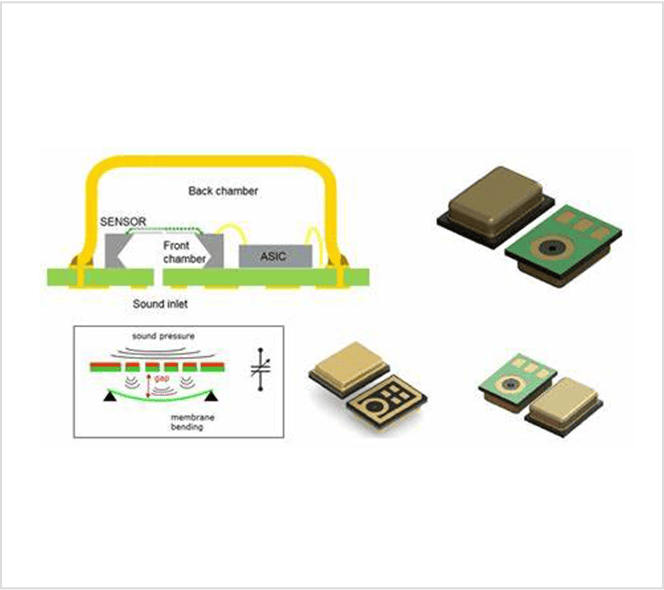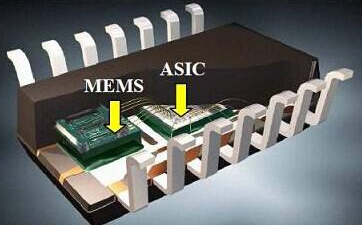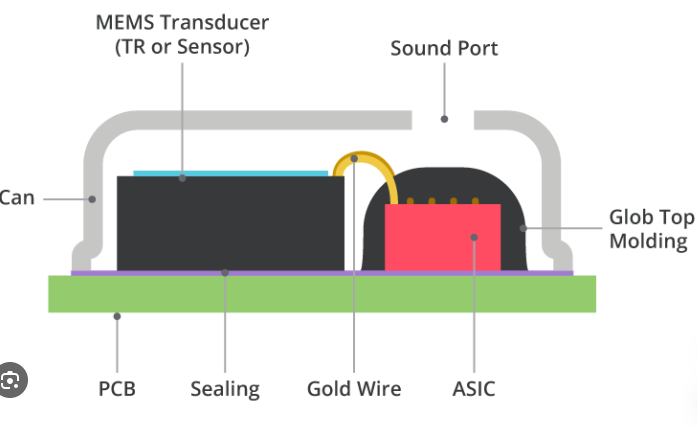


From hearing aids to wearables, choosing the right low power MEMS microphone can double your device‘s battery life. Here’s what engineers need to know about sleep current, dual-mode architectures, and the latest sensor fusion solutions.
Introduction: The Always-On Voice Challenge
Modern smart devices face a fundamental contradiction: users demand voice interfaces that are always listening, yet battery life remains the top metric buyers use to evaluate wearables. Low power MEMS microphones have emerged as the solution to this challenge, enabling always-on voice monitoring without draining the battery.
The MEMS microphone market reached 2.92billionin2025andisprojectedtogrowto3.36 billion in 2026 at a CAGR of 15.2%. Among the most dynamic segments is the low power MEMS microphone category, which has seen particular growth in IoT, hearables, medical, and automotive applications. The global low power piezoelectric MEMS microphone market alone is expected to reach $25.9 billion by 2035 with a CAGR of 11.3% from 2026 to 2035.
This guide explores the low power MEMS microphone landscape—from ultra-low sleep currents to emerging dual-mode architectures and sensor fusion innovations—helping engineers select the right solution for their always-on voice applications.
SISTC specializes in low power MEMS microphone solutions for hearing aids, wearables, and IoT devices. Explore the full product portfolio here.
Market Trends: Why Low Power MEMS Microphones Are Dominating
Market Size and Growth Trajectory
The microphone market (all technologies) was valued at 2.88billionin2025andisexpectedtoreach3.98 billion by 2030 at a CAGR of 6.7%. Several key trends are driving growth in the low power MEMS segment:
- AIoT penetration—Voice-enabled devices are proliferating across smart home, industrial monitoring, and medical applications
- Wearables explosion—TWS earbuds and smartwatches demand ultra-low power always-on audio
- Technology replacement—Low power MEMS are rapidly replacing electret condenser microphones (ECMs) in battery-powered applications
- Hearing aid market growth—The global hearing aid market continues to expand, driving demand for small, low power MEMS microphones with high SNR
Regional Dynamics
Asia-Pacific accounts for the largest share of MEMS microphone production and consumption. China‘s low power piezoelectric MEMS microphone market is growing at a CAGR of 11.3% (2026-2032), driven by the country’s massive consumer electronics and IoT manufacturing ecosystem.
Power Consumption Fundamentals: Understanding the Specification Sheet
Before diving into specific products, engineers need to understand how power consumption is specified and what it means for system design.
Sleep Current vs. Active Current
| Parameter | Typical Range | What It Means |
|---|---|---|
| Sleep / Standby Current | 1–10 μA | Microphone draws minimal power while waiting for voice, typically with voice activity detection (VAD) or acoustic activity detection (AAD) enabled |
| Low-Power Mode (Always-On) | 50–300 μA | Microphone remains active but operates at reduced performance (lower SNR, limited bandwidth) |
| Normal / High-Performance Mode | 0.5–1.5 mA | Full acoustic performance, highest SNR and widest bandwidth |
The Power-Performance Trade-Off
Low power operation does not necessarily mean compromised acoustic quality. Modern MEMS microphones achieve high SNR even in low-power modes. For example, Infineon‘s IM69D128S can operate in a 180 μA low-power mode while maintaining a 69 dB SNR.
Three Key Low Power MEMS Microphone Technologies
1. Multi-Performance Mode ( Dual-Mode) MEMS Microphone
Dual-mode MEMS microphones feature separate sniffing (monitoring) and normal modes. The sniffing mode detects acoustic activity at extremely low power without compromising performance. When acoustic activity above a programmable threshold is detected, the microphone automatically transitions to high-performance mode, ensuring optimal acoustic parameters for voice control applications.
Industry Example: STMicroelectronics‘ MP23DB02MM offers multiple performance modes (sleep: 2 μA, low-power: 285 μA, normal: 800 μA), enabling always-on experiences with low power consumption.
SISTC takes this further. The WBC6556 draws only 26 μA in normal operation, while the WBC3526ES35 achieves an industry-leading 19 μA typical supply current—both without sacrificing acoustic performance.
2. Acoustic Activity Detection (AAD) / Voice Activity Detection (VAD) Hardware Integration
Modern low power MEMS microphones integrate acoustic activity detection directly into the microphone or a companion ultra-low-power processor. This hardware-based detection eliminates the need to wake the main application processor for voice activity monitoring.
Leading implementations include:
- T5838 (TDK InvenSense): Features AAD with programmable thresholds and filters, drawing only 20 μA in always-on listening mode
- MP23DB02MM (ST): 2 μA sleep mode with multiple performance modes
- SpectroMic (AIStorm): Integrates MEMS microphone, smart VAD, and charge-domain spectral engine in a single 5.5×5.5 mm package, achieving 18 μA always-on current—more than 10× lower standby power than conventional digital microphones
3. Piezoelectric MEMS Microphones: The Low Power Frontier
Piezoelectric MEMS microphones eliminate the need for a bias voltage required by capacitive MEMS architectures, using the direct piezoelectric effect where mechanical deformation of a piezoelectric material generates an electrical charge. This enables lower power consumption and simpler circuit integration.
Key advantages:
- No bias voltage required → lower system-level power
- Simpler integration → reduced BOM complexity
- Inherent low-power operation ideal for always-on IoT voice triggers
AlN has emerged as the preferred piezoelectric material for PMMs due to its full compatibility with CMOS/MEMS processes, low dielectric constant, minimal energy loss, and high mechanical quality factor.
WBC Series: SISTC‘s Low Power MEMS Microphone Portfolio
SISTC‘s WBC series represents a significant breakthrough in low power MEMS microphone technology, offering analog output solutions with exceptional SNR and ultra-low current consumption. The WBC6556 and WBC3526ES35 are designed for hearing aids and other power-critical applications including wearables, IoT voice interfaces, and portable medical devices.
WBC6556: 26 μA High-Performance Analog MEMS Microphone
The WBC6556 is a high-quality, high-performance, low-power analog output bottom-ported omnidirectional MEMS microphone.
| Specification | Value |
|---|---|
| Supply Current (Typical) | 26 μA |
| Supply Voltage | 0.9–3.6 V |
| SNR (Signal-to-Noise Ratio) | 64 dB(A) |
| Sensitivity | -38 dBV/Pa (typical) |
| AOP (Acoustic Overload Point) | 120 dB SPL |
| THD @ 94 dB SPL | 0.1% (typical) |
| Package | 2.75 mm × 1.85 mm × 0.90 mm |
| Operating Temperature | -40°C to +125°C |
| Key Feature | Built-in EMI filter for RF noise attenuation |
Key advantages:
- Industry-leading 26 μA current consumption extends battery life for hearing aids and wearables
- 64 dBA SNR delivers natural sound with high intelligibility
- Flat wideband frequency response ensures accurate sound reproduction across the audible spectrum
- Built-in EMI filter provides high immunity to electromagnetic interference
- Surface-mount package compatible with standard SMD reflow soldering
- Wide operating temperature range from -40°C to +125°C, suitable for industrial and outdoor applications
WBC3526ES35: 19 μA Ultra-Low Power Analog MEMS Microphone
The WBC3526ES35 is a high-quality, low-voltage, low-power analog output bottom-ported omnidirectional MEMS microphone.
| Specification | Value |
|---|---|
| Supply Current (Typical) | 19 μA |
| Supply Voltage | 0.9–3.6 V |
| SNR (Signal-to-Noise Ratio) | 69 dB(A) |
| Sensitivity | -35 dBV/Pa (typical) |
| EIN (Equivalent Input Noise) | 25 dBA SPL |
| AOP (Acoustic Overload Point) | 120 dB SPL |
| THD @ 110 dB SPL | 0.5% (typical) |
| Package | 3.35 mm × 2.50 mm × 0.96 mm |
| Operating Temperature | -40°C to +125°C |
Key advantages:
- Ultra-low 19 μA supply current — one of the lowest in its class
- Exceptional 69 dBA SNR for clear, intelligible sound
- Wide 0.9–3.6 V supply voltage range supports 1.0 V, 1.8 V, and 3.3 V systems
- Built-in EMI filter for RF noise protection
- Halogen and lead-free, RoHS compliant
- Low equivalent input noise (25 dBA) ensures quiet operation in sensitive applications
- SMT reflow compatible with no sensitivity degradation
SISTC‘s Radar-Triggered AI MEMS Microphone Array: Beyond Single-Microphone Design
For applications requiring microphone arrays and the absolute lowest standby power, SISTC has developed an innovative radar-triggered AI MEMS microphone array module.
How it works: Instead of keeping microphone arrays continuously active (which increases power consumption and system load), this smart voice front-end solution uses a radar sensor in ultra-low power standby mode to continuously detect motion within a defined sensing range. When a user approaches, the radar triggers the MEMS microphone array to activate the voice AI front-end for seamless interaction. Between activations, the entire audio front-end system can be completely powered down.
Key advantage: This radar + microphone sensor fusion architecture dramatically reduces standby power compared to traditional always-on listening approaches. Systems can achieve <50 μA total standby power while waiting for user interaction.
Learn more about SISTC‘s radar-triggered AI MEMS microphone array here.
Application Deep Dive: Low Power MEMS Microphones in Action
Hearing Aids: The Primary Application
Both the WBC6556 and WBC3526ES35 are explicitly designed for hearing aid applications. This segment has unique requirements:
- Extremely low power consumption — hearing aid batteries must last 5–10 days
- High SNR — delivering clear, natural sound with minimal background noise
- Small footprint — fitting within the compact form factor of modern hearing aids
- Flat frequency response — natural sound reproduction across audible spectrum
The WBC3526ES35‘s 19 μA supply current and 69 dBA SNR make it particularly well-suited for premium hearing aids that require longer battery life without compromising acoustic quality. The WBC6556‘s 26 μA current and 64 dBA SNR provide a cost-effective solution for standard hearing aid designs.
Wearable Devices (TWS Earphones, Smartwatches, Smart Glasses)
Power requirement: Always-on voice monitoring average <200 μA
Challenges: Miniature form factor, beamforming support, voice wake-up, ANC compatibility
Why SISTC low power MEMS microphones excel: The WBC3526ES35‘s ultra-low 19 μA current and exceptional SNR support always-on wake-word detection without draining the battery. The built-in EMI filter ensures reliable operation in RF-dense environments near Bluetooth radios.
The wearables market is evolving rapidly. Upbeat Technology‘s new UPM01 and UPM02 dual-microphone system—featuring a bone conduction MEMS sensor paired with a traditional air microphone—has already shipped 1 million units, with 2 million OWS units expected by mid-2026. This validates the growing demand for low power microphone solutions in hearables.
Sensor Fusion: Radar-Triggered MEMS Microphone Arrays
For applications where even the lowest 20 μA always-on current is unacceptable, sensor fusion provides an alternative. SISTC‘s radar-triggered AI MEMS microphone array keeps the entire audio system completely powered down until a user is physically present, offering near-zero standby power.
Target applications:
- Smart home voice assistants
- Industrial IoT sensors in low-traffic areas
- Security cameras with voice-enabled features
- Public kiosks and interactive displays
Engineer‘s Selection Guide: Choosing the Right Low Power MEMS Microphone
Decision Tree: Three Questions to Find Your Optimal Solution
Question 1: Do you need an analog or digital output?
| Output Type | Pros | Cons | Best For |
|---|---|---|---|
| Analog | Lowest power, simple integration, no clock required | More susceptible to PCB noise | Hearing aids, battery-powered IoT, simple MCU interfaces |
| Digital (PDM/I²S) | Noise immunity, direct DSP connection, array support | Higher power, requires clock | Microphone arrays, edge AI, high-fidelity recording |
The WBC6556 and WBC3526ES35 are analog output devices, making them ideal for low-power MCU-based systems and hearing aid applications.
Question 2: What is your power budget per microphone?
| Usage Scenario | Recommended Current Budget | SISTC Solution |
|---|---|---|
| Hearing aid (continuous use) | ≤30 μA | WBC6556 (26 μA) or WBC3526ES35 (19 μA) |
| Always-on wake word detection | ≤200 μA (could use higher) | WBC3526ES35 (19 μA in always-on low-power mode) |
| High-quality audio streaming | ≤1 mA | Both devices—switching to higher SNR in active use |
Question 3: What SNR do you require for voice recognition?
| SNR Target | Application Suitability | SISTC Product |
|---|---|---|
| 60–64 dB | Standard voice capture, speech recognition in quiet environments | WBC6556 (64 dBA) |
| 65–69 dB | Premium voice capture, far-field recognition, noisy environments | WBC3526ES35 (69 dBA) |
| 70+ dB | High-end AI voice interfaces, professional audio | Contact SISTC for custom options |
Multi-Microphone Array Considerations
For devices using multiple MEMS microphones for beamforming or noise cancellation, consider:
- Phase consistency — The WBC series‘ ultra-stable performance ensures tight unit-to-unit matching
- Sensitivity tolerance — Analog output devices require consistent gain matching across channels
- EMI immunity — Built-in EMI filters in the WBC series prevent RF interference from degrading array performance
Practical Layout and Integration Tips
text
VDD ──────┬─── 0.1 μF ──┬─── to VDD pin
          │              │
    (capacitor near microphone)

OUT ──────┬─── DC blocking ──┬─── to CODEC / MCU
          │   capacitor       │
          └───  (0.1 μF) ─────┘

GND ───────────────────────── to system ground
Note: All ground pins must be connected to ground. Class 2 dielectrics should NOT be used for decoupling capacitors near the microphone.
Product Comparison: WBC6556 vs. WBC3526ES35
| Parameter | WBC6556 | WBC3526ES35 |
|---|---|---|
| Supply Current (Typical) | 26 μA | 19 μA |
| SNR | 64 dBA | 69 dBA |
| Sensitivity (Typical) | -38 dBV/Pa | -35 dBV/Pa |
| AOP | 120 dB SPL | 120 dB SPL |
| EIN | 28.5 dBA SPL | 25 dBA SPL |
| Package Size | 2.75 × 1.85 × 0.90 mm | 3.35 × 2.50 × 0.96 mm |
| Key Strength | Ultra-small package, cost-effective | Industry-leading 19 μA current, highest SNR in class |
| Best Application | Miniature hearing aids, wearables | Premium hearing aids, high-fidelity always-on devices |
Which device is right for you? Choose WBC6556 for ultra-compact designs where every millimeter matters. Choose WBC3526ES35 for premium hearing aids where longer battery life and superior SNR are critical.
For samples and technical evaluation of either device, email denny_tan@sistc.com.
Emerging Technology Landscape: Dual-Mode and Piezoelectric MEMS Microphones
Dual-Mode MEMS Microphones: The Market Trend
Dual-mode MEMS microphones are gaining momentum across the industry. By offering sniffing and normal modes, these devices enable always-on voice monitoring without sacrificing acoustic quality when voice is detected. Future dual-mode MEMS microphones are expected to become mainstream in voice-controlled IoT devices.
Piezoelectric MEMS Microphones: Market Outlook
The piezoelectric MEMS microphone segment is experiencing rapid growth. The market is projected to grow from 73.45billion(2024)to148.17 billion (2031) at a CAGR of 10.6%. Recent research into self-powered piezoelectric MEMS microphones using vertically aligned ZnO nanowires with suspended graphene/PMMA diaphragms demonstrates significant promise for next-generation acoustic transducers.
Aluminum Nitride (AlN) has emerged as the preferred piezoelectric material for MEMS microphones due to its CMOS process compatibility, minimal energy loss, and high mechanical quality factor.
Mixed-Signal VAD Solutions
Voice activity detection can also be implemented at the mixed-signal level. For engineers using analog MEMS microphones, the WT-a-HD-MC.03 virtual component provides an embedded microphone bias and VAD engine for ultra-low-power applications, enabling drastic power reduction without the wake word detection requiring a full DSP.
Edge AI and Voice Processing Integration
Modern smart MEMS microphones are integrating ADCs and DSP capabilities on-chip, sampling analog audio at 8–32 kHz and using sigma-delta conversion for clean digital outputs.
For engineers building edge AI systems, TDK‘s T5848 I²S microphone supports IoT and edge AI applications, including wearables, home security systems, action cameras, TV remotes, and various AI systems. The tight integration of AAD-enabled T5838 microphones with the AON1100 M3 processor creates a truly always-on voice and sound interface platform with power consumption as low as 20 μA.
Frequently Asked Questions
Q1: What is the difference between sleep current and always-on current in low power MEMS microphones?
A: Sleep current (2–10 μA) is the power drawn when the microphone is in a low-power state but still capable of detecting voice activity with VAD/AAD. Always-on current (50–300 μA) is the power drawn when the microphone remains fully active, typically in low-power mode with reduced SNR.
Q2: How low can low power MEMS microphone current consumption go?
A: Today‘s best-in-class devices achieve 19–26 μA in normal operating mode (SISTC WBC series). For AAD-based always-on listening, the TDK T5838 achieves 20 μA. For sleep/power-down modes, devices like the ST MP23DB02MM achieve 2 μA. Some devices achieve less than 1 μA in sleep mode.
Q3: Does low power consumption sacrifice sound quality?
A: Not necessarily. The WBC3526ES35 achieves 69 dBA SNR at only 19 μA. Many low power devices maintain high SNR in performance mode. The key is selecting a device with multiple performance modes so low power doesn‘t become a permanent compromise.
Q4: Which low power MEMS microphone should I choose for a hearing aid?
A: Premium designs should consider the WBC3526ES35 (19 μA, 69 dBA SNR) for maximum battery life and acoustic performance. Cost-optimized designs can use the WBC6556 (26 μA, 64 dBA SNR).
Q5: Can I use analog MEMS microphones in microphone arrays for beamforming?
A: Yes, but require careful gain matching and phase consistency. The WBC series‘ ultra-stable performance and tight unit-to-unit matching make them well-suited for array applications. For digital arrays, PDM output devices like the TDK T5838 or ST MP23DB02MM are preferred because they offer built-in noise immunity and simpler routing.
Q6: What is the future of low power MEMS microphones?
A: Three major trends: (1) dual-mode architectures will become mainstream in voice-controlled IoT devices, (2) piezoelectric MEMS microphones will gain market share by eliminating bias voltage requirements, and (3) sensor fusion combining radar or PIR with MEMS microphones will enable near-zero standby power for smart home devices.
Resources & Technical Library
| Resource | Description |
|---|---|
| SISTC Low Power MEMS Microphone Product Line | WBC6556 and WBC3526ES35 datasheets, ordering information, and free sample requests |
| WBC6556 Datasheet (PDF) | Complete technical specifications for the 26 μA, 64 dBA MEMS microphone |
| WBC3526ES35 Datasheet (PDF) | Complete technical specifications for the 19 μA, 69 dBA MEMS microphone |
| Radar-Triggered AI MEMS Microphone Array: The Future of Low-Power Smart Voice Interfaces | SISTC‘s innovative sensor fusion architecture for near-zero standby power |
| PatSnap Piezoelectric MEMS Microphone Landscape 2026 | Comprehensive market analysis and technology landscape |
| Infineon XENSIV™ MEMS Microphones Guide | Application notes and design guidance for MEMS microphone integration |
Conclusion: Low Power MEMS Microphones Are Enabling Always-On Voice
Low power MEMS microphones have become the foundational technology for always-on voice interfaces. From 19 μA analog devices for hearing aids to AAD-enabled digital microphones for smart home, the market offers solutions for every power budget.
Looking ahead, three trends will shape the next generation of low power MEMS microphones:
- Multi-mode architectures will become standard, enabling devices to dynamically trade off power for performance based on acoustic environment
- Piezoelectric MEMS will gain market share by eliminating bias voltage requirements, with AlN leading the way
- Sensor fusion — combining MEMS microphones with radar, PIR, or accelerometers — will push standby power toward zero
For engineers designing battery-powered voice devices, the good news is that low power MEMS microphone technology has never been better. The WBC3526ES35‘s 19 μA and 69 dBA SNR represent a new standard for what‘s possible in a small package.
Ready to start your low power voice design? Explore SISTC‘s full MEMS microphone portfolio at sistc.com and request free samples by emailing denny_tan@sistc.com to accelerate your prototyping.
Published: May 9, 2026 | Last updated: May 9, 2026
This guide is part of SISTC‘s ongoing technical content series. For inquiries about low power MEMS microphones, white papers, or application support, contact denny_tan@sistc.com.