

*15+ years of acoustic innovation, high-SNR MEMS arrays, and proprietary noise-reduction algorithms—here‘s what engineers need to know before their next microphone module design.*
Introduction: Why MEMS Microphone Modules Are the Digital Ears of the AIoT Era
From voice assistants embedded in smart speakers to active noise cancellation in TWS earbuds, and from spatial audio capture in AR/VR headsets to acoustic event detection in vehicles, MEMS microphone modules have quietly become the universal “ears” of modern smart devices. According to Global Info Research, the global MEMS microphone market reached 1.914billionin2024andisforecasttogrowto2.624 billion by 2031 at a CAGR of 4.2%. Another market analysis projects growth from 2.0billionin2023to4.07 billion by 2032 at a CAGR of 8.2%, underscoring the accelerating demand across multiple verticals.
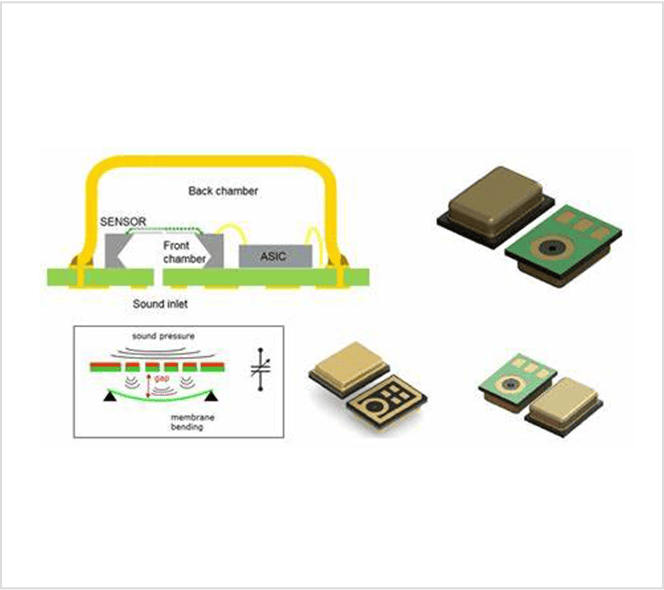
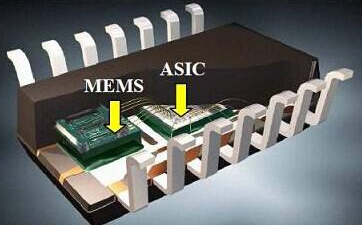
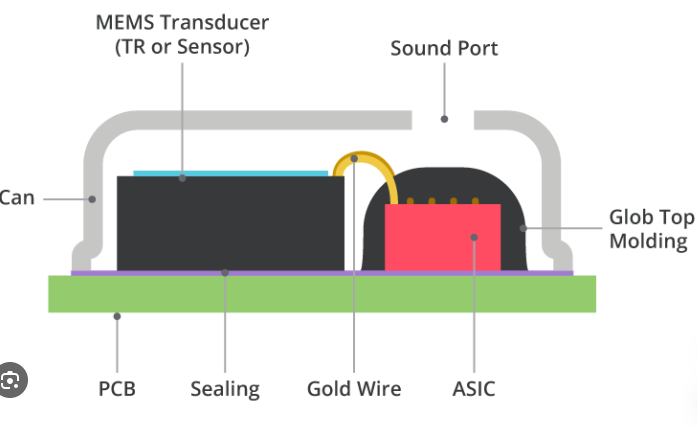
A MEMS microphone module integrates three core components: a MEMS acoustic sensor that converts sound pressure into a variable capacitance, an ASIC readout circuit that converts that capacitance into an electrical signal, and a miniature package that protects the delicate structures while enabling surface-mount assembly. Compared to traditional electret condenser microphones, MEMS devices offer dramatic advantages: smaller footprints (as small as 3.5mm × 2.65mm), ultra-low sleep currents (down to 2 µA in always-on listening modes), superior RF and EMI immunity, and full SMT compatibility for automated reflow soldering.
This guide explores the MEMS microphone module landscape—market trends driving growth, breakthrough technologies reshaping performance limits, and practical selection criteria to help hardware engineers, embedded system developers, and IoT product managers make informed decisions.
Market Landscape: Who Is Driving MEMS Microphone Module Growth?
Market Size and Growth Trajectory
The MEMS microphone market is experiencing robust growth across consumer electronics, automotive, industrial IoT, and medical devices. Key market research indicates:
- 2024 valuation: US$ 1.914 billion
- 2031 forecast: US$ 2.624 billion (CAGR 4.2%)
- Alternative projection:2023: 2.0billion→2032:4.07 billion (CAGR 8.2%)
- Broader microphone market (all technologies): 2.88billionin2025→3.98 billion by 2030 (CAGR 6.7%)
Asia-Pacific accounts for approximately 60% of global MEMS microphone shipments, with the top three manufacturers—Knowles, STMicroelectronics, and TDK—collectively holding around 68% of the market.
Three Primary Growth Drivers
1. Consumer Electronics Upgrades. Smartphones (AI noise reduction for calls), TWS earphones (ANC and voice wake-up), and smart speakers (far-field microphone arrays) are driving per-device microphone counts ever higher.
2. Deep AIoT Integration. High-SNR microphones (64 dB+) have become the acoustic front-end foundation for AI assistants. Applications now span smart home devices, industrial monitoring systems, medical hearing aids, and enterprise collaboration equipment.
3. Technology Replacement. MEMS microphone modules have achieved cost parity with—and in many cases undercut—legacy ECM solutions while delivering superior performance and reliability.
Leading Manufacturers in the MEMS Microphone Module Space
| Manufacturer | Key Series | Strengths |
|---|---|---|
| Knowles | SiSonic™, Falcon, Robin | High SNR (68.5 dB), high AOP (130 dB SPL) |
| Infineon | XENSIV™ | Dual-backplate design, 71.5 dB SNR |
| STMicroelectronics | MP23DB series | Ultra-low sleep current (2 µA) |
| TDK InvenSense | T5848, T3902 | I²S interface, Acoustic Activity Detection |
| sensiBel | SBM100B | Optical MEMS, 80 dB SNR, 146 dB AOP |
| SISTC | WBC Series, ARRAY Microphone Modules | 15+ years acoustic innovation, superior phase consistency for microphone arrays |
Core Technical Specifications: Understanding the MEMS Microphone Module Datasheet
For engineers evaluating MEMS microphone modules, these five parameters form the essential decision framework:
| Parameter | What It Measures | Importance |
|---|---|---|
| SNR (Signal-to-Noise Ratio) | Purity of captured audio (higher = less hiss) | Critical for AI voice recognition—64 dB+ recommended |
| AOP (Acoustic Overload Point) | Maximum SPL before clipping | 130 dB+ required for outdoor/industrial applications |
| Power Consumption (Active/Sleep) | Battery life impact | Sleep current below 10 µA for always-on devices |
| Sensitivity (±1 dB vs ±3 dB) | Unit-to-unit consistency | Stricter tolerance needed for beamforming arrays |
| Output Format | PDM / I²S / Analog | Depends on host processor interface |
Signal-to-Noise Ratio (SNR)
SNR determines the quietest sound a microphone can capture before noise overwhelms the signal. For AI voice assistants, 64 dB SNR has become the baseline requirement. Industry benchmarks include:
- Infineon‘s IM72D128V: 71.5 dB SNR, 430 µA in high-performance mode, 160 µA in low-power mode
- A new generation domestic MEMS signal conditioning chip achieves SNR up to 74 dB
- SISTC’s WBC series MEMS microphones incorporate proprietary comb readout designs that minimize fluid damping noise, delivering superior SNR performance for beamforming arrays
Acoustic Overload Point (AOP)
AOP determines how loud a sound the microphone can capture without distortion. Applications requiring high AOP (130 dB+ SPL) include outdoor camera recording, automotive acoustic event detection, and industrial monitoring systems. The sensiBel optical MEMS microphone pushes AOP to 146 dB SPL, representing a significant advance over conventional capacitive designs.
Power Consumption: The Always-On Imperative
Ultra-low power consumption has become a critical design requirement for IoT and wearable devices requiring always-on voice monitoring. Industry benchmarks include:
- ST MP23DB series: 2 µA sleep current
- TDK T5848 I²S microphone: 130 µA in always-on low-power mode
- TDK T3902 PDM microphone: 185 µA ultra-low power always-on mode
- SISTC‘s low-power MEMS microphone modules are engineered for superior phase consistency while maintaining minimal power budgets, making them ideal for battery-sensitive AIoT applications
Output Format: PDM vs I²S vs Analog
| Interface | Pros | Cons | Best For |
|---|---|---|---|
| PDM | Excellent bit-error tolerance, noise immunity, pin-saving stereo support | Requires decimation filter on host | Multi-mic arrays, space-constrained designs |
| I²S | Standard audio sample rate output, direct connection to DSP/codec | Internal decimation filter increases package size | Simplified system integration, longer PCB traces |
| Analog | Lowest cost per unit, universal codec support | Susceptible to PCB noise, requires careful grounding | Cost-sensitive designs with adequate shielding |
I²S offers better signal quality over longer distances, making it preferable when the microphone and processing circuitry are not placed closely on the PCB [5†L4-L10].
Beyond the Datasheet: Emerging MEMS Microphone Module Technologies
Ultra-Low-Power Always-On Voice Monitoring
Always-on voice activation has become a standard requirement for smart devices, but traditional approaches that keep the main application processor active drain batteries quickly. Emerging solutions integrate voice activity detection and keyword spotting directly into the microphone module or a companion low-power neural processor.
SISTC‘s radar-triggered AI MEMS microphone array module represents an innovative approach to this challenge. By combining radar-based presence detection with MEMS microphone arrays, the system remains in a deep sleep state until a user approaches, then instantly activates the voice AI front-end for seamless interaction. This radar + microphone sensor fusion architecture dramatically reduces standby power consumption compared to traditional always-on listening approaches.
AI + Edge Computing Integration
The convergence of MEMS microphones with edge AI processing is accelerating. XMOS xcore.ai devices can handle up to 32 channels of PCM audio streams from microphone arrays, enabling AI noise reduction, low-latency voice pickup, and multi-channel audio processing entirely on the edge.
Optical MEMS Microphones: Breaking Capacitive Limits
Traditional capacitive MEMS microphones face physical constraints in SNR, AOP, and dynamic range. sensiBel has pioneered an alternative approach using optical interferometry to detect membrane displacement. The SBM100B delivers:
- 80 dB SNR (20+ dB beyond leading capacitive devices)
- 146 dB AOP
- 132 dB dynamic range
- Volume just 1/50 to 1/100 of studio reference microphones
While primarily positioned for professional audio and automotive applications at this stage, optical MEMS technology signals a path forward for performance-intensive MEMS microphone modules.
Miniaturization and SiP Integration
System-in-Package integration is driving MEMS microphone modules into ever-smaller footprints. The rise of TWS earphones, AR glasses, and compact wearables has created strong demand for 3.5 mm² scale packaging with integrated ASICs. Knowles‘ SiSonic Titan-series devices reduce current consumption by 60% compared to typical digital MEMS microphones while maintaining latency as low as 3 µs, making them suitable for always-on and ANC applications.
Application Deep Dive: MEMS Microphone Modules in Action
Wearable Devices (TWS Earphones, AR/VR Glasses)
Requirements: Ultra-compact footprint, beamforming support, ANC compatibility, voice wake-up
SISTC Application Example: For TWS earphones and AR glasses, SISTC’s compact MEMS microphone modules combine high-SNR sensors with excellent phase matching—a critical requirement for beamforming algorithms that must maintain stable spatial filtering across left and right channels. The company‘s MEMS microphone modules for wearables leverage 15+ years of acoustic expertise to deliver the hardware-software synergy these demanding applications require.
IoT and Smart Home Devices
Requirements: Far-field voice capture, always-on listening with <10 µA sleep current, PDM output for MCU compatibility
Smart speakers, smart displays, and voice-controlled appliances require MEMS microphone modules that can pick up commands from across a room while rejecting background noise such as HVAC systems, television audio, and conversation. Microphone arrays with beamforming algorithms create directional sensitivity patterns that focus on the speaker while suppressing noise from other directions.
Edge AI and Voice-Activated Systems
Requirements: Local keyword spotting, AI noise reduction, multi-channel audio processing
The migration of AI processing to the edge is reshaping MEMS microphone module requirements. Rather than streaming audio to the cloud for processing—which consumes bandwidth and raises privacy concerns—edge AI systems perform voice activity detection, wake-word recognition, and even command classification locally on-device.
SISTC‘s radar-triggered AI MEMS microphone array exemplifies this trend, combining a radar sensor for presence detection with MEMS microphone front-ends to create an intelligent always-on system that only activates the voice AI pipeline when a user is actually present. This architecture can be further enhanced by pairing SISTC’s high-performance WBC series MEMS microphones with XMOS xcore.ai edge AI MCUs for complete on-device voice processing.
Automotive Electronics
Requirements: AEC-Q103 qualification, wide temperature range (-40°C to +85°C), high AOP for cabin and exterior acoustic monitoring
Automotive applications for MEMS microphone modules are expanding rapidly. In-cabin monitoring systems support voice commands, occupant detection, and noise cancellation for hands-free calling. Exterior acoustic event detection can identify approaching emergency vehicles, detect honking, or support acoustic vehicle alerting systems for EVs.
Industrial and Professional Audio
Requirements: Ultra-low noise floor, flat frequency response, wide dynamic range
Industrial applications such as predictive maintenance use MEMS microphone modules to capture acoustic signatures of rotating machinery, detecting bearing wear or alignment issues before they cause failures. SISTC provides free samples for technical evaluation to support project development in these and other demanding applications .
Engineering Selection Guide: Choosing the Right MEMS Microphone Module
Step 1: Define Your Success Criteria
Ask these five questions before evaluating datasheets:
- What is the target SNR? AI voice applications typically require ≥64 dB. Best-in-class industrial designs may target ≥71 dB.
- What is the power budget? For always‑on systems, sleep current must be <10 µA. Active current matters for streaming applications.
- What is the maximum SPL environment? If your device will be used near loud machinery or outdoors, verify AOP ≥120 dB SPL.
- What interface does your host processor support? PDM saves pins and works well with most MCUs; I²S simplifies software integration.
- Will you use multiple microphones? For arrays, sensitivity matching (±1 dB) and phase consistency are non‑negotiable.
Step 2: Understand Sensitivity Tolerance Implications
Sensitivity matching across multiple microphones directly impacts beamforming performance. A ±3 dB tolerance array will have significant variation in channel gain, causing beamforming nulls to shift unpredictably. For applications requiring precise directional pickup—such as video conferencing soundbars or smart speakers with far-field voice capture—specify MEMS microphone modules with ±1 dB sensitivity tolerance and use an array architecture that can calibrate residual mismatches in digital signal processing.
Step 3: Evaluate Power vs. Performance Trade-offs
| Application | Recommended Sleep Current | Recommended Active Current |
|---|---|---|
| Smart speaker (plugged-in) | Not critical | ≤1.2 mA |
| Battery-powered IoT node | ≤10 µA | ≤500 µA |
| TWS earbud (all-day use) | ≤5 µA | ≤400 µA |
| Wearable health monitor | ≤2 µA | ≤200 µA |
Step 4: Consider Package and PCB Layout
Bottom-port vs. top-port designs affect PCB stack-up and enclosure sealing. For ultra‑compact designs, MEMS microphone modules as small as 2.65 mm × 3.5 mm are now available. Sealed dual-diaphragm structures—such as Infineon‘s patent‑protected designs—offer improved dust and moisture resistance for outdoor or industrial applications.
Step 5: Plan for Volume Manufacturing – And Take Advantage of Sample Programs
MEMS microphone modules are designed for high‑volume SMT assembly. Work with your contract manufacturer early to establish reflow profiles compatible with your chosen device. For initial prototyping, many MEMS module suppliers offer evaluation kits and free samples to accelerate development.
Pro Tip: SISTC offers free samples for technical evaluation—email denny_tan@sistc.com to apply and speed up your project‘s proof‑of‑concept phase .
Frequently Asked Questions
Q1: What is the difference between a MEMS microphone module and a traditional ECM capsule?
A: MEMS microphone modules are significantly smaller (<1 mm height), consume far less power (sleep as low as 2 µA), offer superior RF and EMI immunity, and support SMT reflow soldering. Traditional ECMs may offer lower unit cost but lack these integration advantages.
Q2: How do I choose a MEMS microphone module for a battery‑powered IoT device with always‑on voice wake-up?
A: Prioritize three specifications: (1) sleep current <10 µA, (2) SNR ≥64 dB for reliable voice capture, and (3) PDM output for easy MCU integration. Devices like ST‘s MP23DB series or SISTC‘s low‑power modules are representative of this category.
Q3: Can MEMS microphone modules work reliably in outdoor or automotive environments with high background noise?
A: Yes, provided you select a module with adequate AOP (≥120 dB SPL). The sensiBel optical MEMS achieves 146 dB AOP for extreme environments, while Knowles Robin offers 130 dB SPL for outdoor applications.
Q4: What is the typical power consumption of a MEMS microphone in always-on mode?
A: State‑of‑the‑art devices achieve sleep/standby currents of 2–10 µA. The ST MP23DB series draws 2 µA in sleep mode; TDK‘s T5848 consumes 130 µA in always‑on low‑power mode. Emerging solutions like the AIStorm SpectroMic KWS compress total always‑on power (including VAD) to 18 µA.
Q5: What new MEMS microphone module trends should engineers watch for in 2026 and beyond?
A: Three major trends: (1) optical MEMS microphones breaking capacitive SNR and AOP limits, (2) edge AI integration moving voice processing fully on‑device, and (3) continued power reduction pushing always‑on sleep currents below 1 µA.
Resources & Technical Library
| Resource | Description |
|---|---|
| SISTC MEMS Microphone Arrays | High-SNR MEMS arrays with proprietary noise reduction, superior phase consistency for AIoT applications |
| Understanding MEMS Microphone Specifications | Guide from SISTC covering key MEMS microphone parameters for smart audio design |
| High-Performance Beamforming Microphone Arrays Using SISTC WBC Series | Technical white paper on beamforming principles and array performance optimization |
| Radar-Triggered AI MEMS Microphone Array | SISTC’s smart voice front-end solution combining radar presence detection with MEMS microphone arrays |
| Infineon XENSIV™ MEMS Microphones Selection Guide | Official Infineon product portfolio and application notes |
Conclusion: MEMS Microphone Modules Powering the Intelligent Audio Future
MEMS microphone modules have transitioned from a niche technology to the dominant acoustic front‑end solution across virtually all smart device categories. Consumer electronics, AIoT, automotive, industrial monitoring, and professional audio all benefit from the unique combination of tiny footprint, ultra‑low power consumption, and excellent acoustic performance that MEMS technology delivers.
Looking ahead, three trends will shape the next generation of MEMS microphone modules:
- Continued power reduction, with always‑on listening approaching <1 µA total system power
- Tighter integration with edge AI, bringing voice recognition and noise suppression directly to the microphone module or companion processor
- Optical MEMS breakthroughs that challenge the performance limits of conventional capacitive designs
For engineers and product teams developing voice‑enabled smart devices, understanding the interplay between SNR, AOP, power consumption, and output interface is essential to selecting the right MEMS microphone module for the job.
Ready to start your next smart audio design? Explore SISTC‘s MEMS microphone array modules at sistc.com/product-category/sensor-module/arrays-microphone-module/ and take advantage of free sample offers to accelerate your prototype development.
Published: May 6, 2026 | Last updated: May 6, 2026
This guide is part of SISTC‘s ongoing technical content series. For inquiries about MEMS microphone modules, white papers, or application support, contact denny_tan@sistc.com.