


In an era where Human-Computer Interaction (HCI) is becoming increasingly intuitive, “Voice” has emerged as the primary gateway to the digital world. However, for a machine to truly “understand” humans in real-world environments, a single microphone is no longer enough. MEMS Microphone Arrays are the critical technology bridging this gap.
1. What is a MEMS Microphone Array?
Simply put, a microphone array is a system consisting of multiple MEMS (Micro-Electro-Mechanical Systems) units—ranging from 2, 4, 8, to hundreds—arranged in specific geometric configurations (linear, circular, or spherical).
By working in tandem with advanced Digital Signal Processing (DSP) and AI algorithms, these arrays mimic the human auditory system, providing machines with a “spatial brain” to process sound rather than just recording it.
Explore Our Solutions: Discover our high-performanceMEMS Mic Array Multimodal Modulesdesigned for seamless hardware-software integration.
2. How Arrays Elevate the HCI Experience
Beamforming: Focusing on Your Voice
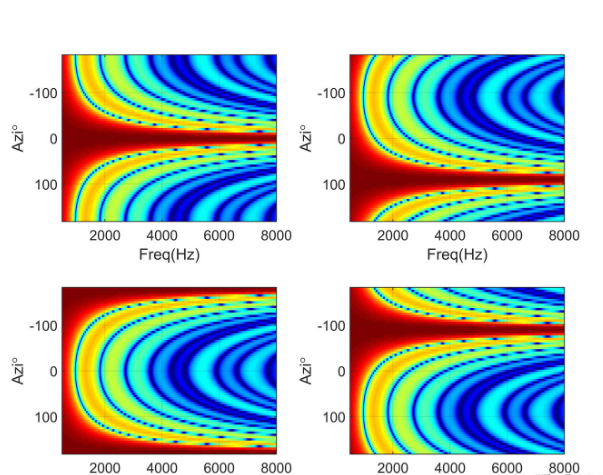
In noisy environments, the array creates a “virtual corridor” aimed at the target speaker. It suppresses ambient noise from other directions, ensuring crystal-clear pickup even in a crowded room. This is the core technology behind the success of Zoom Rooms Video Conferencing Systems, where the speaker’s voice must remain clear regardless of their position in the room.
Direction of Arrival (DOA) Estimation
By calculating the micro-second time difference of sound reaching each sensor, the system identifies exactly where the speaker is located.
- Application: Allows service robots to turn and “face” the user, making Human-Machine Dialogue feel more natural and empathetic.
Acoustic Echo Cancellation (AEC) & Noise Suppression (NS)
Ever wondered how your smart speaker hears your command while playing loud music? The array identifies the device’s own output and “subtracts” it from the input signal, isolating only the user’s voice.
Far-Field Voice Recognition
Traditional microphones require you to speak closely. High-SNR MEMS arrays enable reliable interaction from 3 to 5 meters away—a fundamental requirement for the Internet of Things (IoT) and smart home automation.
3. Real-World Applications & Benchmarks
| Application | Industry Standard | Key Technology Highlight |
| Video Conferencing | Zoom Rooms | Multi-channel linear arrays for automatic speaker tracking. |
| Smart Home | Amazon Echo / Google Home | 6-8 Mic circular arrays for 360° far-field pickup. |
| Automotive | AI Cockpit Assistants | Zonal pickup to isolate driver commands from passenger noise. |
| AI Kiosks | Smart Retail Terminals | Integration of Multimodal MEMS Modules for noisy public spaces. |
4. Why Partner with Wuxi Silicon Source Technology (SISTC)?
With 15 years of expertise in acoustic innovation, Wuxi Silicon Source Technology Co., Ltd. specializes in the design and manufacturing of high-performance MEMS microphones.
Our core advantages include:
- Advanced Audio Pickup: Our arrays utilize high-SNR sensors and proprietary noise-reduction algorithms.
- Hardware-Software Synergy: We provide comprehensive solutions including signal conditioning circuits and low-power wireless modules.
- Global Reliability: Our products are engineered to meet the evolving needs of the global AI and IoT markets.
5. Challenges and the Future
While the technology is advanced, the industry still faces the “Cockpit Party Problem”—isolating individual voices in extreme noise or when multiple people speak at once. As we integrate deeper Deep Learning models and more powerful DSPs, the next generation of arrays will be smaller, cheaper, and even more perceptive.
Conclusion
The MEMS microphone array is not just a collection of hardware; it is the intersection of acoustics, signal processing, and AI. It is the bridge that allows machines to move from “hearing” to “listening.”
Looking for professional acoustic integration? Visit www.sistc.com to explore our full range of MEMS sensors and array modules.