


1. Introduction: The New Paradigm of Sound Localization in the Smart Sensing Era
In the landscape of industrial automation and artificial intelligence, the paradigm is shifting from pure computer vision (CV) to advanced Acoustic AI. While vision systems excel in surface inspections, they are fundamentally limited by line-of-sight barriers, lighting conditions, and structural occlusions.
Acoustic AI, conversely, offers omnidirectional, penetrative perception. It enables systems to “hear” mechanical degradation, micro-frictional variances, and high-frequency gas turbulence before any visible deformation or thermal signature occurs.
[Acoustic Event] ──► [Time-Delayed Arrival (TDOA)] ──► [FPGA Beamforming] ──► [Real-Time Visual Overlay]
Transitioning from merely detecting a sound anomaly to understanding its frequency signature and pinpointing its exact 3D spatial coordinates forms the core value proposition of spatial sound source localization. However, traditional industrial acoustic measurement instrumentation has historically been crippled by three bottlenecks: rigid, non-configurable microphone array topologies, hard-capped channel scalability, and proprietary, closed data protocols.
To break down these data silos, this paper provides an architectural deep dive into a new class of Open Architecture, Multi-Channel Acoustic Acquisition Platforms. By decoupling hardware acquisition from software processing layers, these platforms deliver unprecedented flexibility in spatial acoustic mapping and predictive maintenance workflows.
2. Theoretical Foundations of Spatial Sound Localization
2.1 The Core Principle: Two-Step Time Difference of Arrival (TDOA) Optimization
In modern acoustic engineering, spatial localization is most efficiently achieved via a two-step methodology: first calculating the Time Delay Estimation (TDE) between discrete sensor nodes, and subsequently executing a geometric localization solver.
Consider an acoustic source located at an unknown spatial coordinate $\mathbf{r}_s = [x_s, y_s, z_s]^T$. An array consists of $M$ microphones, where the position of the $i$-th microphone is defined as $\mathbf{r}_i = [x_i, y_i, z_i]^T$. Assuming a constant speed of sound in air $c \approx 343 \text{ m/s}$ at $20^\circ\text{C}$, the physical distance $d_i$ from the sound source to the $i$-th microphone is expressed as:
$$d_i = \|\mathbf{r}_s – \mathbf{r}_i\|_2 = \sqrt{(x_s – x_i)^2 + (y_s – y_i)^2 + (z_s – z_i)^2}$$
The distance difference $\Delta d_{i,1}$ between the $i$-th sensor and a reference sensor (typically the first microphone, $\mathbf{r}_1$) is directly proportional to the true Time Difference of Arrival $\tau_{i,1}$:
$$\Delta d_{i,1} = d_i – d_1 = c \cdot \tau_{i,1}$$
By capturing $\tau_{i,1}$ across multiple synchronized channels ($i = 2, 3, \dots, M$), the system constructs a system of non-linear hyperbolic equations. Solving this matrix via Taylor-series expansion, Least-Squares estimation, or Second-Order Cone Programming (SOCP) yields the exact spatial coordinates of the target emitter.
2.2 Algorithm Path: GCC-PHAT and Direction of Arrival (DOA) Estimation
In real-world industrial environments, ambient factory noise and multi-path room reverberations introduce significant phase distortions, ruining standard cross-correlation accuracy. To mitigate this, the Generalized Cross-Correlation with Phase Transform (GCC-PHAT) weighting function is utilized.
The GCC-PHAT framework normalizes the cross-power spectrum magnitude, discarding amplitude fluctuations to isolate pure phase information. The frequency-domain formulation is defined as:
$$R_{x_1x_2}^{PHAT}(\tau) = \int_{-\infty}^{+\infty} \frac{X_1(f)X_2^*(f)}{|X_1(f)X_2^*(f)|} e^{j2\pi f \tau} df$$
Where $X_1(f)$ and $X_2(f)$ represent the Short-Time Fourier Transforms (STFT) of the two microphone signals, and $*$ denotes the complex conjugate. This processing step narrows the cross-correlation peak into a sharp delta-like function, preserving microsecond-level ($\mu s$) timing accuracy even in low Signal-to-Noise Ratio (SNR) settings.
When paired with high-density grids, these TDOA inputs feed into advanced Direction of Arrival (DOA) algorithms such as Steered-Response Power with Phase Transform (SRP-PHAT) or MUltiple SIgnal Classification (MUSIC) to trace independent paths for multiple concurrent sound emitters.
3. The Open Architecture Paradigm: Dissolving Sound Data Silos
Traditional acoustic cameras operate as closed-loop diagnostic tools. Open architecture models completely redefine this by emphasizing structural modularity and user programmability.
3.1 Dynamically Configurable Array Topologies
Whether deploying a linear array for distant pipeline corridors, a circular array for 360-degree horizontal localization, or a spherical matrix for complete 3D cabin acoustic mapping, the open-architecture platform permits users to dynamically update the geometric coordinate matrix via software. The localization engine adapts its baseline matrix on the fly without requiring firm-coded rebuilding.
3.2 High-Density Elastic Channel Scalability
Utilizing a synchronous cascading bus topology, the platform scales linearly from a compact 4-channel embedded module up to a massive 128-channel or 256-channel high-density array. This massive parallel channel processing capability provides the structural foundation required for ultra-high-resolution acoustic cameras.
3.3 Raw Data Decoupling via Standard SDKs
Instead of locking data behind proprietary formats, the platform natively outputs uncompressed, phase-aligned raw PCM audio streams alongside processed coordinate telemetry. Complete developer support is provided through native C++ and Python SDKs, ensuring seamless data routing into custom PyTorch deep learning pipelines, Robot Operating System (ROS) environments, or enterprise IoT infrastructure.
4. Hardware Pillars of Multi-Channel Acoustic Platforms
To reliably capture acoustic wavefields in harsh industrial deployments, the underlying hardware architecture must achieve high precision across several parameters:
| Core Engineering Metric | Performance Target | Technical Implementation |
| Inter-Channel Time Synchronization | $< 1\,\mu\text{s}$ Phase Alignment | Uniform distributed master clock gating executed via dedicated FPGA state-machines, eliminating clock jitter over long runs. |
| Acoustic Dynamic Range | $24\text{-bit}$ Sigma-Delta ADCs | Low-noise analog front-ends designed to handle faint mechanical micro-frictions ($20\,\text{dB SPL}$) up to transient pneumatic exhausts ($130\,\text{dB SPL}$) without clipping. |
| Broadband Frequency Response | $2\,\text{kHz} \text{ to } 80\,\text{kHz}+$ | Supports ultra-wideband MEMS arrays, successfully capturing both audible human noise profiles and ultrasonic structural signatures. |
| Multi-Modal Data Fusion | Hardware-level Timestamping | Native hardware interfaces for co-axial visible light cameras, thermal infrared sensors, and IEPE vibration accelerometers. |
Edge-to-Cloud Co-Processing Topology
Processing 128 channels of high-frequency audio generates massive raw data throughput. The platform solves this traffic bottleneck by executing a bifurcated edge-to-cloud computing pipeline:
- The Edge Engine (FPGA/ARM): Handles high-throughput digital filtering, real-time spatial beamforming, and instantaneous TDOA matrix solving. It produces fluid real-time acoustic heatmaps directly on-device with an update latency of less than $10\,\text{ms}$.
- The Cloud Infrastructure: Aggregates telemetry from multiple distributed edge arrays for long-term acoustic anomaly trend analysis, AI sound event classification, and updating fleet-wide predictive maintenance models.
5. Industrial Engineering Deployments & Applications
5.1 Industrial Predictive Maintenance
In power plants, chemical facilities, and manufacturing lines, rotating machinery exhibits unique acoustic anomalies prior to mechanical breakdown. Distributed multi-channel arrays track these subtle changes over time, pinpointing structural flaws—such as localized inner-race bearing spalls or gear tooth cracks—long before standard temperature sensors alert technicians.
5.2 Gas Leak and Electrical Inspection
Pressurized gas bypassing a seal creates localized turbulent flow, emitting strong ultrasonic signatures. Similarly, high-voltage substations suffering from insulation breakdown release transient Electrical Partial Discharges (PD). High-density acoustic imaging platforms track these ultrasound emissions (typically $20\,\text{kHz} \text{ to } 80\,\text{kHz}$), isolating the physical coordinates of the hazard against intense low-frequency ambient factory noise.
5.3 Low-Slow-Small (LSS) Aerial Target Tracking
Tracking non-cooperative, low-altitude small drones presents a major challenge for traditional radar due to ground clutter interference.
- Passive Acoustic Detection: Sound arrays act as completely passive acoustic radars. Because they do not emit electromagnetic waves, they are immune to radio jamming and cannot be detected by electronic countermeasure equipment.
- Drone Rotor Tracking: By utilizing high-density arrays, the platform isolates the specific narrow-band harmonic signature generated by drone rotors, computing precise DOA angles and continuously feeding trajectory tracking logs to automated pan-tilt-zoom (PTZ) optical cameras. This creates an effective passive security layer for airports, substations, and sensitive border areas.
5.4 Smart Cabin & NVH Testing
Within automotive research and development, open multi-channel platforms streamline Noise, Vibration, and Harshness (NVH) profiling. Placing micro-MEMS arrays inside smart vehicle cabins maps acoustic leakage paths through door seals or HVAC ducts, enabling rapid structural optimizations.
6. Integration and Deployment Guide
6.1 Array Topology Selection Matrix
- For Long-Distance, Narrow-Angle Tracking (e.g., Drone Defense, Asset Monitoring): Deploy a large-aperture, sparse Cross or Concentric Ring Array ($\ge 64$ or $128$ channels). Larger physical baselines drastically enhance spatial resolution for lower-frequency bands.
- For Near-Field, Wide-Angle Imaging (e.g., Handheld Inspection, Bench Testing): Deploy a compact, high-density Spiral or Uniform Circular Array ($32$ to $64$ channels). This architecture suppresses spatial aliasing and optimizes near-field visual mapping overlay.
6.2 Managing Acoustic Reverberation and Multipath Reflections
In enclosed test cells or reflective concrete factories, boundary echoes create ghost targets on acoustic heatmaps. Engineers can apply two distinct mitigation strategies:
- Physical Decoupling: Introduce boundary-layer acoustic absorption materials around the rear housing of the microphone array to dampen late-stage ambient reflections.
- Algorithmic De-reverberation: Activate the platform SDK’s built-in cepstral de-convolution filters. By applying adaptive inverse-filtering, the algorithm isolates the direct-path wavefront from secondary delayed reflections, restoring sharp TDOA peaks.
6.3 Real-Time Multi-Channel Data Frame Schema
The following JSON data structure illustrates a standard telemetry frame output by the platform’s open SDK API, ready for ingestion by upstream enterprise automation software:
JSON
{
  "timestamp": "2026-05-27T22:35:12.004Z",
  "device_id": "SISTC-ARRAY-128X",
  "system_status": "NOMINAL",
  "active_channels": 128,
  "sampling_rate_hz": 96000,
  "detected_sources": [
    {
      "source_id": 41,
      "acoustic_signature": "Ultrasonic_Gas_Leak",
      "confidence_score": 0.97,
      "spatial_coordinates": {
        "x_axis_meters": 4.12,
        "y_axis_meters": -1.85,
        "z_axis_meters": 0.92
      },
      "direction_of_arrival": {
        "azimuth_degrees": 204.1,
        "elevation_degrees": 12.6
      },
      "sound_pressure_level_db": 74.2
    }
  ]
}
7. Accelerating Deployment with SISTC Expert Solutions
Building an industrial-grade multi-channel acoustic acquisition framework from scratch requires significant R&D investment across acoustic array physics, high-speed FPGA routing, and real-time DSP optimization.
To bypass these hurdles and compress your time-to-market, explore the ready-to-deploy hardware suites from Wuxi Silicon Source Technology Co., Ltd. (SISTC). Our specialized product range includes high-performance embedded developer components like the ASAI144 Portable Acoustic Imaging Array and the SV-IDK64 / SV-NDT128 Open Industrial Acoustic Inspection Platforms. For fully integrated, plug-and-play field diagnostics, the SV-P128 Handheld Acoustic Imaging Camera combines a high-density 128-channel MEMS microphone array with real-time beamforming capabilities powered by a high-performance processing core.
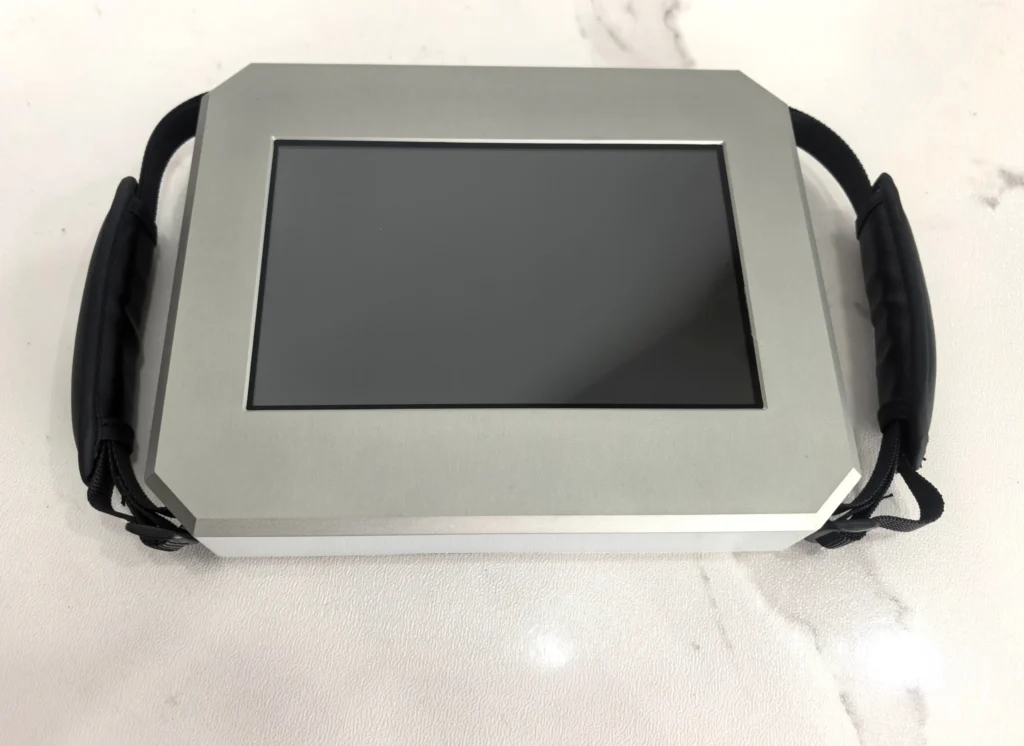
Discover our complete portfolio of edge-ready hardware, modular array designs, and open-architecture SDKs by visiting the official SISTC Acoustic Imaging & Intelligent Sensing Solutions developer platform.