

Passive Acoustic Sensing for Real-Time Sound Source Localization
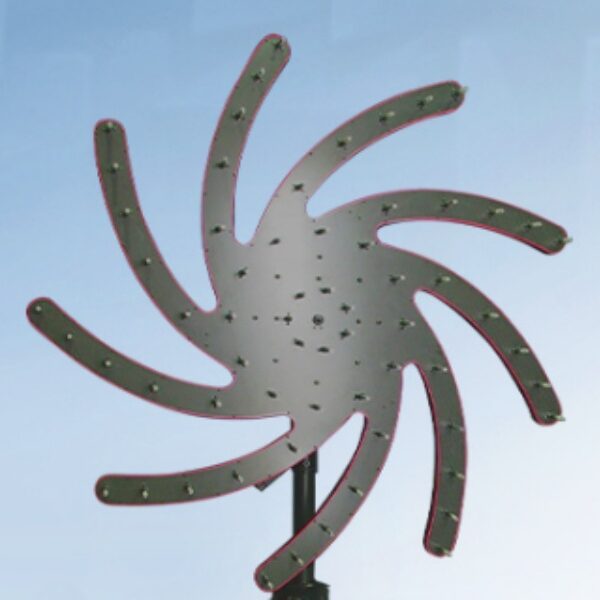
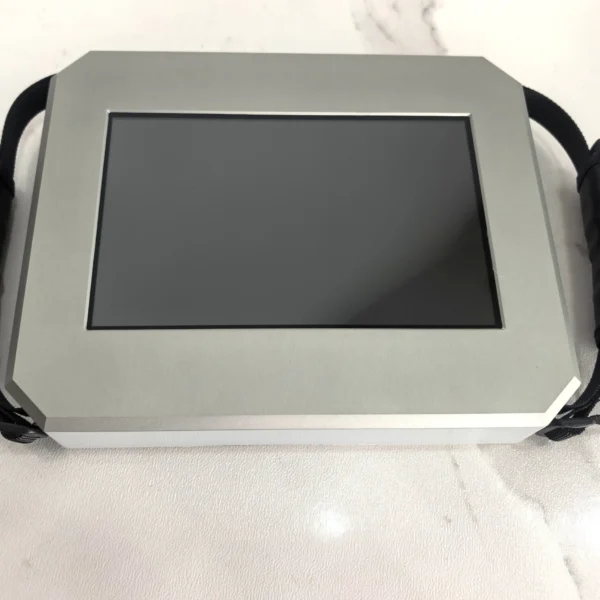
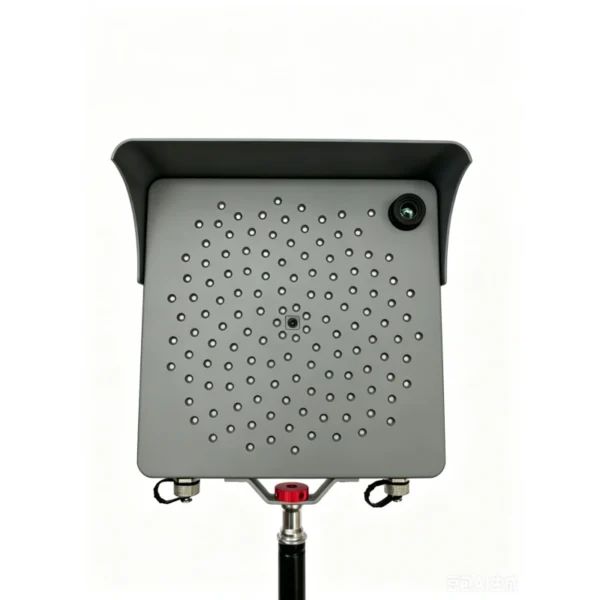
The SV-SSL128/64 is a high-density MEMS microphone array system developed for real-time passive acoustic sensing and sound source localization.
The system integrates 128 or 64 synchronized MEMS microphones into a compact array with an approximately 450 mm aperture. By analyzing the time differences between acoustic signals received by different microphones, the system can estimate the direction and position of multiple sound sources.
Core processing is based on Time Difference of Arrival (TDOA) and beamforming, enabling the system to convert acoustic signals into spatial information.
The result is more than a conventional microphone array. The SV-SSL128/64 provides a complete acoustic sensing foundation for applications requiring sound detection, localization, directional pickup, tracking and AI-based acoustic recognition.
Passive Detection Without Signal Transmission
One of the key characteristics of the SV-SSL128/64 is its passive acoustic sensing architecture.
The system does not need to transmit RF, ultrasonic or other active detection signals. Instead, it continuously receives and analyzes naturally generated acoustic signals from the surrounding environment.
This passive operating principle provides several advantages:
- No active RF or ultrasonic transmission
- Low power consumption
- Reduced electromagnetic emissions
- Low-profile continuous monitoring
- Suitable for distributed sensor deployments
- Compatible with solar-powered installations
- Suitable for environments where passive sensing is preferred
The system can therefore serve as an acoustic sensing layer alongside other technologies such as cameras, radar and AI perception systems.
128-Channel and 64-Channel Configurations
The SV-SSL platform is available in two channel configurations:
128-Channel Version
The 128-channel configuration provides a high-density spatial sampling architecture for applications requiring higher spatial resolution and advanced multi-source acoustic analysis.
It is particularly suitable for:
- High-resolution acoustic localization
- Multi-source tracking
- Advanced beamforming
- Acoustic imaging
- AI sound recognition
- Research and algorithm development
- Large-scale distributed sensing systems
64-Channel Version
The 64-channel configuration provides a balance between spatial resolution, system complexity, power consumption and deployment cost.
It is suitable for:
- Sound source localization
- Directional sound acquisition
- Industrial acoustic monitoring
- Perimeter monitoring
- Event security
- AI acoustic sensing
- Acoustic algorithm development
Both configurations use synchronized MEMS microphone acquisition to provide a consistent multi-channel acoustic data foundation.
TDOA-Based Sound Source Localization
The SV-SSL128/64 uses Time Difference of Arrival (TDOA) technology to estimate the direction of incoming acoustic signals.
When a sound source generates an acoustic wave, the wave reaches each microphone at a slightly different time depending on the source position and propagation path.
By comparing the relative arrival time between microphone channels, the system can calculate the acoustic source direction.
The localization pipeline can be represented as:
Synchronized MEMS Acquisition → TDOA Estimation → Beamforming → Spatial Localization → Multi-Source Tracking → AI Recognition
This architecture enables the platform to transform raw acoustic information into actionable spatial data.
Beamforming and Directional Audio Pickup
In addition to TDOA localization, beamforming technology can be used to spatially focus on specific directions.
This enables the system to:
- Enhance acoustic signals from a selected direction
- Suppress unwanted off-axis sound
- Generate directional audio streams
- Separate multiple sound sources
- Improve the input quality for downstream AI algorithms
- Provide spatial audio information for acoustic imaging
The system can output multiple directional audio channels, allowing external software or AI algorithms to further process and classify individual sound sources.
Wide Spatial Coverage
A single SV-SSL array provides broad spatial acoustic coverage:
- Azimuth: up to 120°
- Elevation: up to 90°
- Detection distance: up to 1,000 m in quiet environments
- Detection distance: approximately 200 m in urban environments
Actual detection distance depends on the acoustic output of the target, background noise, atmospheric conditions, installation environment and target-to-array geometry.
For larger monitoring areas, multiple arrays can be deployed as a distributed acoustic sensing network.
Multi-Array Collaborative Localization
Multiple SV-SSL arrays can work together to extend the monitored area and improve spatial awareness.
A distributed deployment can combine localization information from multiple acoustic nodes to support:
- Extended-area acoustic monitoring
- Cross-array source localization
- Multi-point sound source tracking
- Large-site acoustic surveillance
- Distributed industrial monitoring
- Multi-zone environmental sensing
This architecture allows system integrators to build scalable acoustic sensing networks rather than relying on a single sensing node.
AI-Based Acoustic Recognition and Classification
Localization provides information about where a sound is coming from. AI acoustic recognition can provide additional information about what type of sound is being detected.
The SV-SSL128/64 can therefore be integrated with AI models for sound classification and event recognition.
Potential AI processing functions include:
- Sound event detection
- Acoustic pattern recognition
- Target sound classification
- Abnormal sound detection
- Multi-source classification
- Acoustic event verification
- Historical acoustic pattern analysis
This creates a complete processing chain:
Detect → Localize → Track → Recognize → Classify → Verify
AI processing can be implemented on an external edge-computing platform or integrated into a larger sensor-fusion architecture.
Low Power Consumption for Distributed Deployment
The system consumes approximately 4 W, making it suitable for applications where power availability is limited.
The low-power architecture supports:
- Solar-powered installations
- Remote monitoring sites
- Distributed acoustic sensor networks
- Long-term continuous operation
- Edge acoustic sensing
- Infrastructure monitoring
For remote locations, the SV-SSL128/64 can be combined with solar power, battery storage and wireless or wired networking to create autonomous acoustic monitoring nodes.
Acoustic Imaging and Multi-Source Monitoring
With up to 16 simultaneous target sources and a sound imaging frame rate of up to 25 FPS, the system can provide real-time spatial information about multiple acoustic events.
This makes the platform suitable for environments where several sound sources may exist simultaneously.
The system can output:
- Azimuth
- Elevation
- Directional audio
- Multiple target positions
- Acoustic imaging information
These outputs can then be displayed through a PC application, edge-computing system or customized visualization platform.
Industrial Acoustic Anomaly Monitoring
The same technology used for sound source localization can also be applied to industrial acoustic diagnostics.
Machines and industrial equipment generate characteristic acoustic signatures during normal operation.
Changes in these signatures can indicate abnormal operating conditions such as:
- Mechanical friction
- Air leakage
- Gas leakage
- Bearing abnormalities
- Valve abnormalities
- Rotating machinery anomalies
- Unexpected impact or collision sounds
- Abnormal equipment noise
The SV-SSL128/64 can provide both spatial information and directional audio, helping maintenance systems identify not only that an abnormal acoustic event occurred, but also where it originated.
Typical Applications
Perimeter and Site Security
Continuous passive acoustic monitoring can provide an additional sensing layer for large sites and protected areas.
The system can detect, localize and classify acoustic events and provide directional information to a central monitoring platform.
Critical Infrastructure Monitoring
The platform can be deployed around large facilities and infrastructure to provide continuous acoustic awareness and detect abnormal acoustic events.
Event Security
Large public or private events can use distributed acoustic sensing nodes to monitor acoustic events across multiple areas.
Industrial Anomaly Detection
Factories, production lines and industrial facilities can use acoustic localization to identify abnormal equipment sounds and determine their physical location.
Environmental Acoustic Monitoring
The system can also be used for long-term monitoring and spatial analysis of environmental sound sources.
Acoustic AI Development
With high-density MEMS microphone channels and spatial acoustic information, the platform provides a hardware foundation for developing customized AI acoustic perception systems.
Key Technical Specifications
| Parameter | Specification |
|---|---|
| Microphone Channels | 128-channel / 64-channel |
| Array Aperture | Approx. 450 mm |
| Localization Technology | TDOA + Beamforming |
| Acoustic Sensing | Passive |
| Frequency Range | 20 Hz – 8 kHz |
| Sound Pressure Level | 25 dB SPL – 120 dB SPL |
| Azimuth Coverage | Up to 120° |
| Elevation Coverage | Up to 90° |
| Maximum Detection Range | Up to 1,000 m in quiet environments |
| Typical Urban Range | Up to approximately 200 m |
| Localization Time | Approx. 100 ms |
| Acoustic Imaging Frame Rate | Up to 25 FPS |
| Maximum Target Sources | Up to 16 |
| Localization Accuracy | ±2.0° for hovering targets |
| Multi-Array Collaboration | Supported |
| Directional Audio Output | Supported |
| Output Information | Azimuth / Elevation / Directional Audio |
| Power Consumption | Approx. 4 W |
| Power Options | DC / Solar-powered deployment |
| AI Integration | Sound recognition, classification and verification |
| Network Architecture | Suitable for distributed deployment |
Actual performance depends on target acoustic characteristics, environmental noise, installation geometry, atmospheric conditions and system configuration.
Why Choose the SV-SSL128/64?
High-Density MEMS Array
Up to 128 synchronized MEMS microphones provide a high-density spatial sampling platform for advanced acoustic localization and beamforming.
Passive Acoustic Detection
The system listens to naturally generated acoustic signals without transmitting active detection signals.
Real-Time Localization
TDOA-based processing provides rapid directional localization with a typical localization time of approximately 100 ms.
3D Acoustic Awareness
The system provides both azimuth and elevation information, enabling three-dimensional acoustic localization.
Multi-Source Capability
The system can process and track multiple acoustic sources, supporting up to 16 simultaneous targets under suitable conditions.
Low Power
Approximately 4 W power consumption enables remote, distributed and solar-powered deployments.
AI-Ready Architecture
The acoustic localization layer can be combined with AI sound recognition and classification to create an intelligent acoustic perception system.
Scalable Deployment
Multiple arrays can be combined to create a distributed acoustic sensing network covering larger areas.
From Microphone Array to Acoustic Intelligence
The SV-SSL128/64 is designed not simply as a microphone array, but as an acoustic perception platform.
By combining high-density MEMS microphones, synchronized acquisition, TDOA localization, beamforming, directional audio and AI-based sound recognition, the platform provides the core sensing layer required for next-generation intelligent acoustic systems.
For system integrators, researchers and OEM/ODM customers, SISTC can further support customized microphone configurations, array geometry, acoustic algorithms, edge computing integration and multi-sensor system development.
SISTC — MEMS Microphone Technology and Intelligent Acoustic Sensing Solutions
Request a Product Demo
🎬 Video Demonstration & API Access
Want to see how the SV-SSL128/64 renders real-time acoustic beamforming maps?
[Watch the Live Product Video Demonstration] (https://youtu.be/KPxs6mSC974)
[Request the SDK & API Documentation] Contact our engineering team at sureny@sistc.com to evaluate our multi-channel audio acquisition APIs and sample demo source codes.