 English
  Chinese
 Published: September 2025
Author: SISTC MEMS Technology Team
Website: www.sistc.com
Abstract
Bone conduction microphones (BCMs) are gaining attention as an alternative to traditional air-conduction (AC) microphones, especially in noisy or tactical environments. Unlike air microphones, BCMs capture vibrations transmitted through the skull, reducing susceptibility to background noise and enabling integration with helmets or respiratory masks.
Recent studies have shown that the location of the BCM on the user’s head has a significant effect on speech intelligibility and sound quality. In this blog, SISTC reviews findings from multiple research efforts and discusses how BCM design insights can contribute to the next generation of MEMS microphone (MEMS MIC) solutions for defense, healthcare, and industrial applications.
1. Why Bone Conduction Microphones?
Traditional microphones — from electret condenser microphones (ECM) to boom-mounted AC microphones — have limitations:
- Ambient noise sensitivity: AC mics capture both the speaker’s voice and environmental noise.
- Portability issues: boom microphones may shift, snag, or require close lip placement.
- User discomfort: throat microphones cause irritation, skin moisture interference, and poor comfort in long-term use.
BCMs solve many of these issues by:
- Capturing speech via skull vibrations instead of airborne sound.
- Operating effectively in noisy environments.
- Integrating seamlessly with helmets, masks, or military gear.
- Remaining stable during movement, unlike boom mics.
👉 Related resource: Bone conduction microphone technology in tactical communication
2. Research Study: Microphone Location Matters
A comprehensive study using the Temco HG-17 BCM evaluated 12 potential head and neck locations for microphone placement. Speech intelligibility and quality were assessed across three playback modes:
- Earphones – for controlled listening.
- Loudspeakers – for open-air playback.
- Bone conduction headsets – direct transmission through vibration.
Key Findings:
- Forehead and Temple placements produced the highest intelligibility and sound quality ratings across all playback modes.
- Collarbone placement yielded the lowest intelligibility and poorest quality, highlighting the importance of location.
- Consistent microphone-skin contact was critical to performance.
3. Implications for MEMS Microphone Design
At SISTC, we recognize that MEMS microphone innovation can borrow design principles from BCM research:
- Low-frequency sensitivity: Similar to our acoustic-vibration MEMS MIC, BCM placement findings help optimize low-frequency detection.
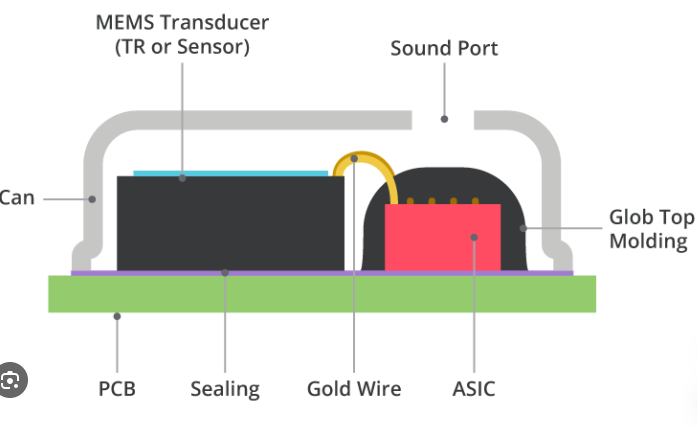
- Noise resilience: By leveraging MEMS packaging and vibration-sensitive structures, MEMS MICs can achieve higher SNR in noisy environments.
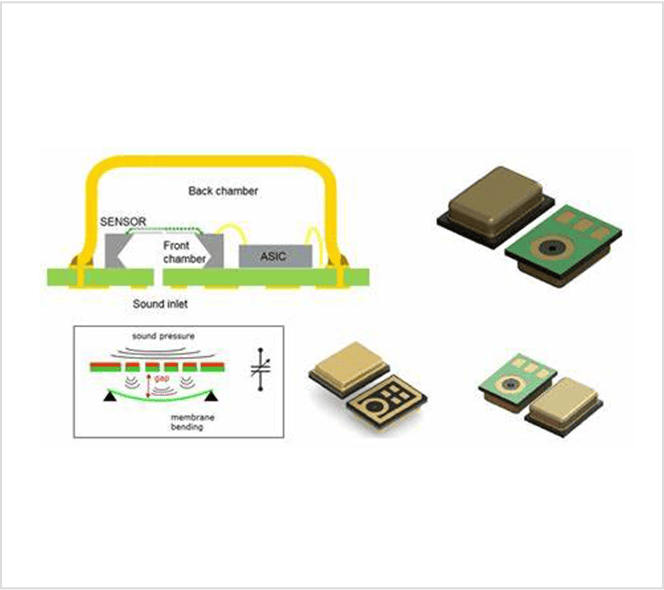
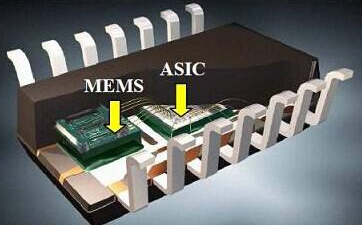
- Compact, integrated solutions: MEMS fabrication allows wafer-level consistency and integration with ASICs for portable, rugged communication systems.
- Healthcare potential: Just as BCMs help detect voice signals in tactical conditions, MEMS MICs with vibration sensitivity can improve stethoscopes, hearing aids, and wearable health monitors.
4. Applications of Bone Conduction and MEMS MICs
- Military & Tactical Communications
Helmets with embedded BCMs or MEMS MICs allow clear communication in combat zones. - Healthcare Devices
From electronic stethoscopes to hearing-assist wearables, vibration-sensitive MEMS MICs extend diagnostic capabilities. - Industrial IoT
Detecting machine vibrations alongside voice commands ensures safer and smarter environments.
👉 Explore related products: MEMS Microphones – SISTC
5. Conclusion
Research clearly shows that bone conduction microphone placement significantly affects performance. Locations like the forehead and temple yield the best intelligibility, while others such as the collarbone may degrade quality.
At SISTC, we are applying these insights to our MEMS microphone innovations, creating sensors that capture both airborne sound and structural vibrations, ensuring high consistency, reliability, and superior performance for demanding applications.
As MEMS MIC technology continues to evolve, cross-pollination between BCM research and semiconductor manufacturing will open new opportunities in defense, healthcare, IoT, and beyond.