

As voice interaction becomes the primary interface for AI-powered devices, microphone array technology has become a critical enabler for accurate and reliable audio capture.
From smart home devices to automotive voice systems, microphone arrays significantly improve speech clarity, noise suppression, and directional sensitivity.
In this article, we break down the working principles of microphone arrays in a clear and practical way—without heavy mathematical complexity.
What Is a Microphone Array?
A microphone array is a system composed of multiple microphone elements whose outputs are processed together to achieve:
- Higher Signal-to-Noise Ratio (SNR)
- Enhanced directionality
- Improved speech intelligibility
Compared to a single microphone, an array can “focus” on sound from a specific direction while suppressing unwanted noise.
👉 Explore SISTC MEMS microphone solutions:
https://sistc.com/product-category/mems-microphone/
Why Microphone Arrays Matter in AI Voice Systems
Modern AI devices rely heavily on far-field voice pickup. However, real-world environments introduce:
- Background noise
- Reverberation
- Multiple speakers
Microphone arrays solve these challenges by combining:
- Spatial filtering (beamforming)
- Noise reduction algorithms
- Multi-channel signal processing
At SISTC, we integrate MEMS microphones + signal conditioning + AI algorithms to deliver optimized acoustic performance across applications.
The Core Principle: Wave Interference
The fundamental principle behind microphone arrays is wave interference.
When sound waves arrive at different microphones:
- Signals from the target direction align → constructive interference
- Signals from other directions misalign → destructive interference
This creates a directional sensitivity pattern, allowing the system to “listen” selectively.
How Beamforming Works
Beamforming is the process of shaping microphone sensitivity electronically.
It involves:
- Time delay adjustment
- Phase alignment
- Signal weighting
Instead of physically moving the microphone, the system can steer its listening direction digitally.
This is essential for:
- Smart speakers
- Conference systems
- Automotive voice assistants
👉 Related solution:
https://sistc.com/product-category/sensor-module/
Key Performance Metrics of Microphone Arrays
To evaluate array performance, four key metrics are used:
1. Signal-to-Noise Ratio (SNR) Gain
Microphone arrays improve SNR by combining signals coherently.
- Signal adds constructively
- Noise adds randomly
Result: Clearer voice capture
2. Directivity (DI – Directivity Index)
Directivity measures how well the array focuses on a specific direction.
- Higher DI = better noise rejection
- Typical arrays outperform traditional microphones significantly
3. Array Factor (AF)
The array factor defines the directional response pattern of the array.
It determines:
- Main lobe (target direction)
- Side lobes (unwanted sensitivity)
- Beam width
4. Frequency Response
Array processing affects frequency response:
- Possible low-frequency roll-off
- Potential high-frequency artifacts
This requires careful system-level design.
Microphone Arrays vs Traditional Microphones
| Feature | Single Mic | Microphone Array |
|---|---|---|
| SNR | Limited | High |
| Directionality | Fixed | Adjustable |
| Noise Suppression | Weak | Strong |
| AI Integration | Basic | Advanced |
Why MEMS Microphone Arrays Are the Future
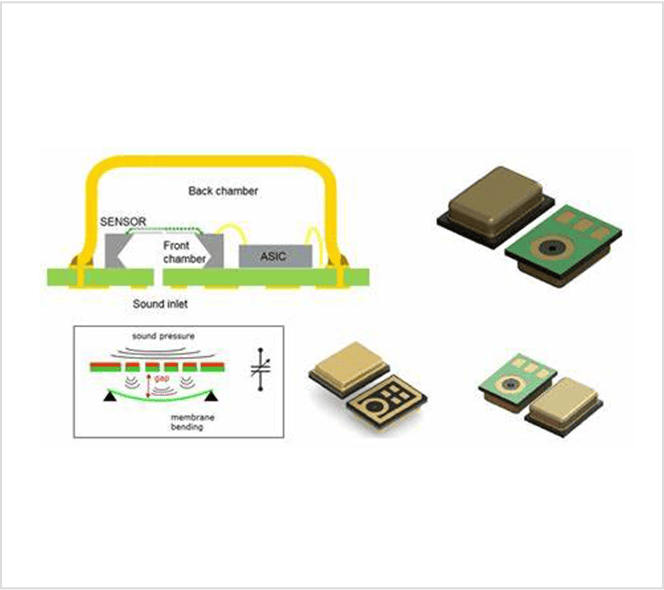
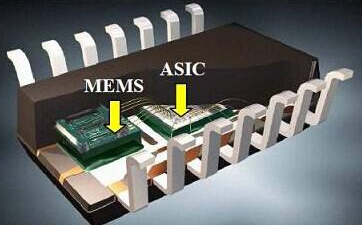
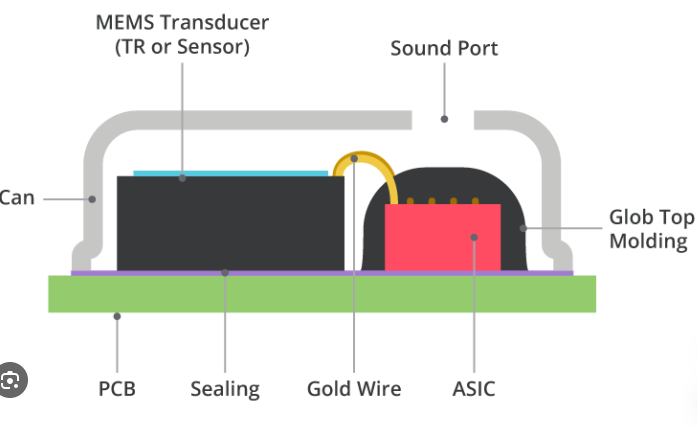
MEMS microphones enable:
- Compact size
- High consistency
- Low power consumption
- Scalable array design
At SISTC, we combine:
- Advanced MEMS design
- Acoustic optimization
- Embedded AI algorithms
to deliver next-generation smart audio solutions.
Conclusion
Microphone arrays are transforming how machines understand sound.
By leveraging wave interference and beamforming, they enable:
- Precise voice capture
- Robust noise suppression
- Intelligent directional listening
In the next article, we’ll explore how 2-microphone arrays work, including phase difference, differential arrays, and real-world design trade-offs.