 English
  Chinese
 Introduction
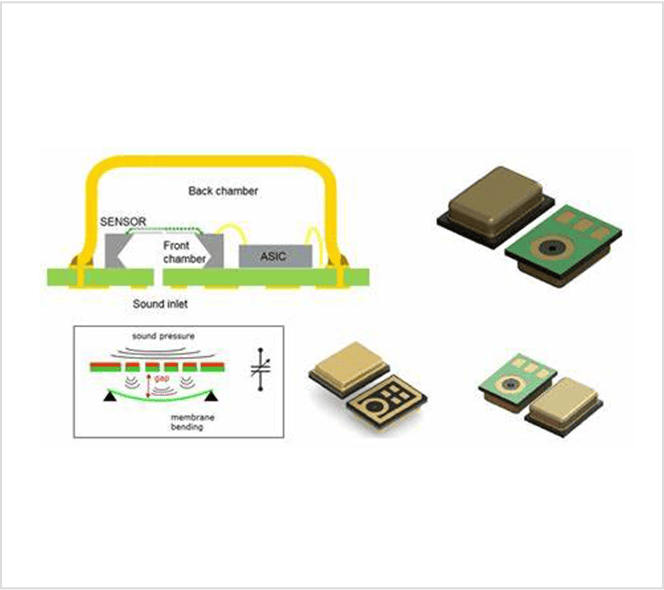
Microelectromechanical systems (MEMS microphones) have become a cornerstone in modern electronics, from smartphones and wearables to automotive and industrial IoT. Traditional readout circuits for capacitive MEMS sensors are mainly implemented using switched-capacitor technology, which, while effective, often consumes too much power for always-on applications.
Recent research introduces a VCO-based CMOS readout circuit that addresses these challenges, offering an excellent balance of sensitivity, low power consumption, and compact design. This new approach marks a significant step toward low-cost and high-performance digital MEMS microphones.
For an in-depth study, see Quintero et al., 2019: VCO-based CMOS readout for MEMS microphones.
How the VCO-Based Readout Works
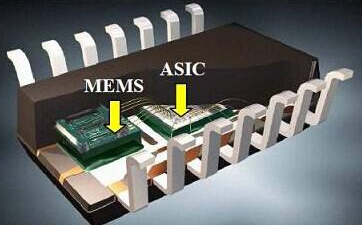
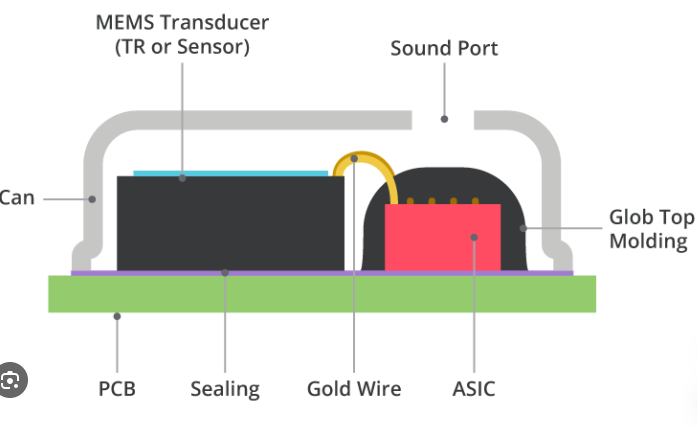
The circuit couples a capacitive MEMS sensor with an impedance converter, which modulates the frequency of a stacked-ring voltage-controlled oscillator (VCO). The oscillator encodes the acoustic signal into a frequency-coded signal, which is then digitized by a time-to-digital converter (TDC) using sigma-delta modulation.
This time-domain design not only reduces complexity but also enables high sensitivity and low noise, key requirements for wearable, portable, and IoT devices.
For further technical background, you can explore Readout Circuits for Capacitive Sensors (Yoo et al., 2021), which provides a comprehensive review of capacitive MEMS sensor interfaces.
Key Performance Metrics
- Process: 130 nm CMOS
- Current consumption: 750 μA at 1.8 V
- Effective area: 0.12 mm²
- Peak SNDR: 77.9 dB-A
- Dynamic range (DR): 100 dB-A
These results demonstrate the potential for low-power, always-on MEMS MICs in voice assistants, wearables, and mobile devices.
For comparison with other oscillator-based approaches, see True-VCO ADC for audio applications (Loi et al., 2024).
Why It Matters for the MEMS MIC Industry
At Wuxi Silicon Source Technology Co., Ltd. (SISTC), we focus on developing and supplying MEMS microphones (MEMS MIC) with high performance, stability, and scalability for global customers. The evolution of readout circuits, such as VCO-based ADCs, is crucial in enabling next-generation MEMS microphones that combine:
- Low power consumption for IoT and wearables
- High signal-to-noise ratio (SNR) for professional audio
- Compact integration for small form-factor consumer devices
Applications
- Smartphones & tablets – always-on voice recognition
- Wearables – fitness trackers and smartwatches
- Medical devices – low-noise stethoscope microphones
- Smart home devices – voice assistant optimization
A practical demonstration of compact integration can be found in Li et al., 2023: Compact MEMS microphone digital readout system.
Conclusion
The VCO-based CMOS readout circuit represents a promising direction in MEMS microphone design, balancing low power and high fidelity. As MEMS technology continues to advance, innovations like these will pave the way for smarter, more energy-efficient audio systems across consumer, medical, and industrial sectors.
At SISTC, we remain committed to driving MEMS MIC innovation and delivering high-quality acoustic solutions to our customers worldwide.