

Introduction
In our previous post, we covered the foundational physics of two-element microphone arrays. However, to achieve true professional-grade audio in challenging environments—such as voice-controlled kiosks or smart conference systems—we must look toward N-element arrays.
At Wuxi Silicon Source Technology (SISTC), our 15 years of expertise in MEMS innovation has shown that more elements don’t just mean more hardware; they mean more precision. Let’s explore how scaling your array transforms its performance.
1. The Power of N: Scaling Array Performance
When we move beyond two microphones to four, eight, or even sixteen elements, two critical things happen:
- Sharper Directivity: The “main lobe” (the area where the mic is most sensitive) becomes significantly narrower. This allows the device to “lock onto” a user’s voice while ignoring noise from just a few degrees away.
- Enhanced SNR Gain: For an additive array, each doubling of the microphone count theoretically provides a 3 dB increase in SNR. An 8-mic array can offer a massive improvement in clarity compared to a single MEMS sensor.
2. Beyond the Line: Linear, Planar, and Volumetric Arrays
The geometry of your array should match your application:
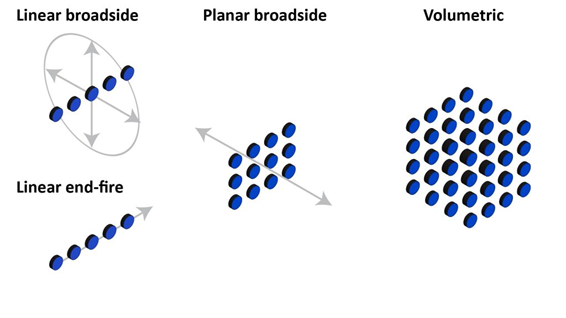
- Linear Arrays: Best for fixed-position pickup (e.g., soundbars or laptops).
- Planar Arrays (2D): Arranged in circles or grids, these provide 360-degree horizontal coverage, ideal for smart speakers placed in the center of a room.
- Volumetric Arrays (3D): Spherical layouts that can track sound in three dimensions, used in advanced VR and spatial audio recording.
3. The Complexity of Differential Microphone Arrays (DMA)
While additive arrays (summing signals) are simple, Differential Microphone Arrays (DMA) are where true acoustic engineering shines. DMAs subtract signals to maintain high directivity across a broader frequency range.
The Engineering Challenge: DMAs are extremely sensitive to microphone mismatch. If one MEMS mic has a slightly different sensitivity or phase than its neighbor, the noise cancellation effect collapses. This is why SISTC emphasizes high-precision analog interfaces and rigorous quality control—ensuring that every component in your array is a perfect match.
4. Frequency Response & Equalization
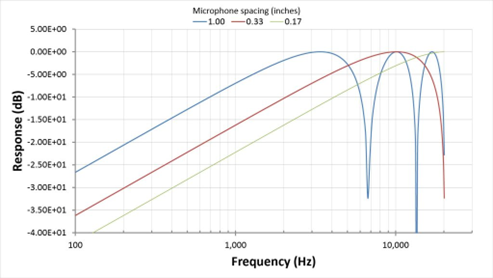
A known characteristic of differential arrays is their 6 dB/octave roll-off in the low frequencies. To deliver natural-sounding voice, this must be compensated for using electronic equalization (EQ).
- Pro-tip: The spacing between microphones (Distance D) determines the “upper cutoff frequency.” If D is too large, you get unwanted “grating lobes” (acoustic aliasing).
5. Array Mics vs. Traditional Directional Mics
Why use an array instead of a traditional cardioid studio microphone?
- Form Factor: MEMS arrays are thin and can be integrated into sleek consumer electronics.
- Adaptive Steering: Unlike a physical shotgun mic, an array can “move” its focus point using software algorithms (Beamforming) without any physical movement.
- Durability: No fragile diaphragms; MEMS technology is robust and vibration-resistant.
Conclusion: Partnering for Acoustic Excellence
Building an effective microphone array is a balance of physics, hardware selection, and digital signal processing. Whether you are designing a high-end teleconferencing device or an industrial noise-monitoring system, Wuxi Silicon Source Technology provides the core MEMS components and technical expertise to bring your vision to life.
Ready to upgrade your audio architecture?
- Browse our Products: www.sistc.com
- Technical Support: Contact Us.