


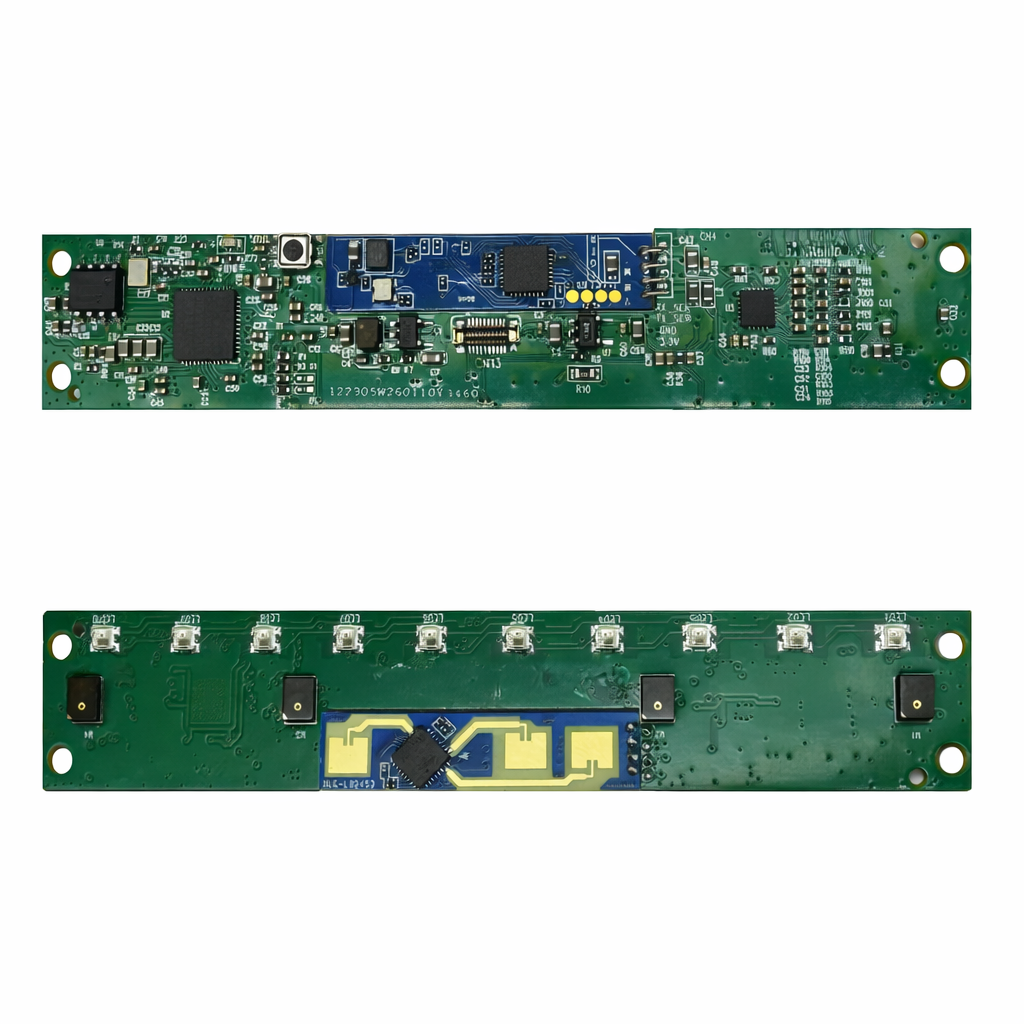
In the era of intelligent devices, always-on voice interaction has become a standard requirement. However, keeping microphone arrays continuously active increases power consumption and system load. To address this challenge, SISTC introduces a radar-triggered AI MEMS microphone array module — a smart voice front-end solution designed for low-power, high-accuracy voice activation.
By combining millimeter-wave radar motion detection with advanced AI noise reduction and beamforming technology, this module enables intelligent voice pickup only when needed.
Why Traditional Always-On Microphones Are Not Enough
Conventional microphone arrays remain active at all times, even when no user interaction occurs. This leads to:
- Increased standby power consumption
- Higher thermal load
- Reduced product lifespan
- Lower overall system efficiency
For battery-powered devices such as smart home panels, AI speakers, interactive kiosks, and industrial control terminals, energy optimization is critical.
Radar-Triggered Voice Activation: A Smarter Approach
The radar-triggered microphone array introduces a more intelligent architecture:
- Radar in ultra-low power standby mode
- Continuous motion detection within a defined sensing range
- Automatic activation of the microphone array upon movement detection
- AI-based voice capture and processing
This architecture ensures the microphone system is active only when user presence is detected, significantly reducing idle power consumption.
Integrated 4-Channel MEMS Microphone Array with AI Processing
At the core of the system is a high-performance 4-channel MEMS microphone array featuring:
- Strict multi-channel synchronization
- Digital PCM output
- High SNR audio capture
- Optimized beamforming algorithms
The integrated 32-bit DSP processor (up to 320 MHz) supports floating-point operations and advanced audio signal processing, including:
- Beamforming
- Acoustic Echo Cancellation (AEC)
- Noise Suppression (NS)
- Dynamic Range Compression (DRC)
- Parametric EQ
- Anti-howling frequency shift
This ensures accurate voice recognition even in acoustically challenging environments.
Up to 30dB AI Noise Suppression
Using deep learning-based algorithms and directional pickup technology, the system achieves:
- Real-time separation of human voice and background noise
- Effective suppression of static and non-static noise
- Up to 30dB noise reduction
- Clear far-field voice capture at 3–5 meters
Compared with traditional omnidirectional microphones, this solution significantly improves speech clarity in noisy home and industrial environments.
Designed for Smart Home and Intelligent Terminals
The radar-triggered AI MEMS microphone module is ideal for:
- Smart home control panels
- AI voice assistants
- Smart speakers
- Interactive display terminals
- Conference systems
- Industrial voice control equipment
- Touchless public kiosks
By integrating radar sensing and voice processing into a single module, product developers can reduce system complexity and accelerate time-to-market.
USB Plug-and-Play with Cross-Platform Compatibility
The module supports:
- USB 2.0 Full-Speed communication
- Standard digital audio PCM output
- Compatibility with Android, Windows, and Linux
- Secondary development for customized host-side algorithms
This makes integration into existing systems fast and flexible.
Acoustic Design Matters
To achieve optimal performance, system-level acoustic design should consider:
- Distance from speakers and cooling fans
- Proper sealing between microphone and panel
- Recommended acoustic opening size: 0.8–1.5mm
- Avoiding internal sound leakage
Proper mechanical integration significantly impacts final voice quality.
The Future of Intelligent Voice Front-End Systems
As smart devices become more context-aware, integrating motion detection with voice interaction is the logical next step. Radar-triggered microphone arrays represent a shift from passive always-on listening to intelligent, energy-efficient activation.
By combining:
- Radar motion sensing
- 4-channel beamforming
- AI noise reduction
- Low-power architecture
SISTC provides a reliable and scalable solution for next-generation smart voice products.
Looking for a Custom Radar + MEMS Microphone Solution?
With over 15 years of experience in MEMS microphone design and advanced audio signal processing, SISTC offers:
- Customized array configurations
- Algorithm optimization
- OEM/ODM support
- Hardware-software integration services
Explore more at:
Integrated Radar Motion Detection + 4-Mic AI Noise Reduction Array – SILICON SOURCE
Or contact our technical team to discuss your project requirements.