


As demand grows for natural, intelligent, voice-driven interaction, developers are increasingly looking beyond simple speech commands. Modern devices now require context awareness, emotion recognition, and higher-quality audio capture—especially in AIoT, robotics, smart assistants, wearables, and edge-AI systems.
To support this new wave of intelligent voice interaction, we introduce our ESP32-S3 AI Emotion Interaction Development Kit, a platform that integrates a high-performance MEMS microphone with a powerful ESP32-S3 module. This combination creates a robust hardware foundation for real-time audio analysis, tone-based emotion detection, and AI-model-driven conversational experiences.
This article explores the architecture, voice processing path, MEMS microphone advantages, and real-world applications of this solution.
1. Why MEMS Microphones Matter in AI Voice Applications
MEMS microphones are the foundation of reliable voice interaction. In scenarios requiring voice activation, far-field pickup, or emotional tone detection, microphone quality directly determines AI performance.
Our MEMS microphones provide key advantages:
- ✔ High Signal-to-Noise Ratio (SNR) — Ensures clean audio capture even in noisy environments—critical for emotion inference and LLM-based voice understanding.
🔗 Reference guideline: Espressif Systems Microphone Design Guidelines for ESP32-S3 series (digital and analog MEMS requirements). Espressif 文档 - ✔ High Sensitivity & Wide Dynamic Range — Captures subtle tone differences, allowing AI to detect emotional patterns in speech (e.g., calm, excited, tense).
- ✔ Consistent Frequency Response — Keeps voice natural and retains harmonic structures essential for ML-based audio analysis.
For additional technical reference, see our detailed blog:
🔗 https://sistc.com/blog-mems-microphone-design-for-esp32-s3-voice-applications/ SISTC
2. ESP32-S3 + MEMS Microphone: A Powerful Voice AI Architecture
The ESP32-S3-WROOM-1 (N16R8) module provides high performance, including AI acceleration instructions, USB OTG, and sufficient memory for embedded voice processing. When paired with a high-SNR MEMS microphone, the system enables:
A. Real-Time Audio Capture
Low-noise, high-quality PCM audio stream for emotion inference and speech processing.
B. Edge Noise Filtering & Wake Word Front-End
The S3 processor can preprocess signal before sending it to the cloud or LLM.
C. LLM-Driven AI Interaction
Compatible with major model APIs — ideal for creating conversational devices.
D. Emotional Sensing via Voice Tone Analysis
Detects variations in pitch, amplitude, energy, and temporal patterns to infer speaker emotion.
🔗 In research: “Speech Emotion Recognition via Graph-based Representations” explores structural and statistical features in speech signals. :contentReference[oaicite:3]{index=3}
For technical implementation on the ESP32-S3 + MEMS microphone interface:
🔗 “Record Audio with XIAO-ESP32-S3-Sense” tutorial shows how to capture I2S microphone data using ESP32-S3.
3. Real-World Applications
1) Emotion-Aware AI Assistants
Home robots, desk companions, or support tools that respond differently based on detected emotional tone.
2) AIoT Human–Machine Interaction
Smart appliances, smart speakers, or control panels that adapt behaviours based on user stress or intent.
3) Robotics Prototyping & R&D
Developers can quickly test conversational robotics with built-in emotion detection as a differentiator.
4) Wearable Voice Interfaces
Earbuds, headsets, or wrist devices requiring high-quality voice capture and tone/context awareness.
5) Embedded Voice Learning & Education
Ideal for AI, IoT, and embedded classes or hands-on developer workshops.
4. Developer-Friendly Hardware for Rapid AI Prototyping
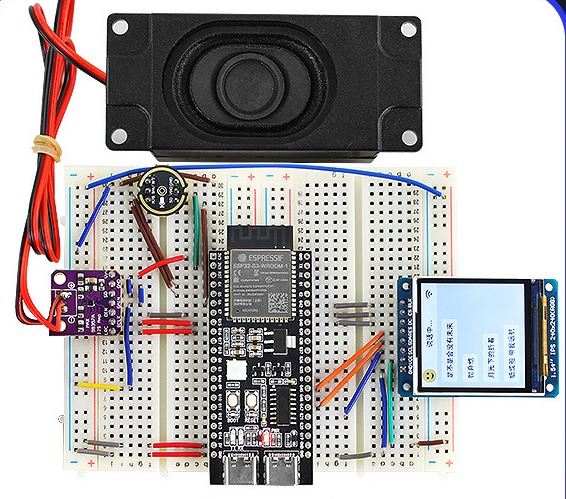
The development kit includes:
- ESP32-S3-WROOM-1 (N16R8)
- On-board USB-to-UART chip, supporting auto-download / debugging
- High-performance MEMS microphone
- Pinout compatible with ESP32-S3-DevKitC-1
- 25.4 mm dual-row spacing (breadboard friendly)
Explore the sensor module series here: 🔗 https://sistc.com/product-category/sensor-module/ (our product category)
This makes the platform a perfect fit for developers who need fast prototyping and reliable hardware performance.
5. Workflow Example: Building an Emotion-Aware Robot in Hours
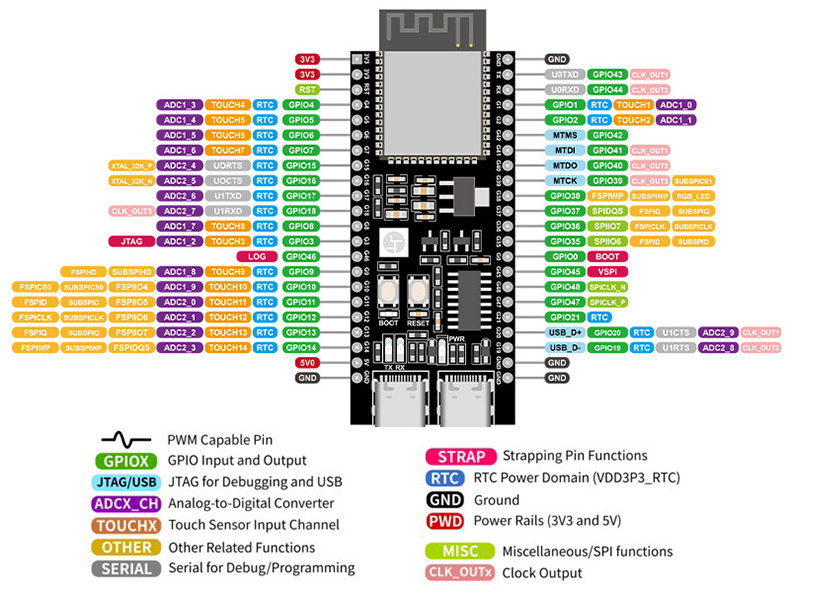
A typical workflow might look like:
- USB plug & play setup (no drivers required)
- Microphone audio capture → feature extraction (tone, intensity, spectral features)
- Emotion inference using built-in AI algorithms (edge or cloud)
- Send input to LLM (DeepSeek / Qwen / Doubao)
- Return context-aware, emotion-sensitive response
- Trigger actions, animations, or device behavior
With this flow, developers can build sophisticated AI prototypes far faster than traditional embedded development cycles.
6. Why Choose Our MEMS Microphone Solutions?
As a professional MEMS microphone manufacturer, we provide:
- Optimized microphones for ESP32-S3 and other AIoT platforms
- Stable supply and industrial-grade quality
- Engineering support for acoustic tuning
- Customization options for different voice interaction scenarios
Our mission is to empower developers worldwide to create next-generation intelligent voice products—reliably and at scale.
Conclusion
Emotion-aware voice interaction is becoming a key requirement in modern AI systems. By combining a high-SNR MEMS microphone with the ESP32-S3’s AI capabilities, developers gain a powerful, affordable, and highly flexible hardware platform suitable for:
- AI assistants
- Smart home devices
- Robotics
- Wearables
- AIoT innovations
Whether you are building a prototype or designing your next-generation product, the ESP32-S3 + MEMS microphone solution opens the door to truly intelligent and human-centred interaction.