


Introduction
Industrial inspection is entering a new era where machines are expected not only to see but also to hear, understand, and react intelligently. Traditional machine vision systems have significantly improved production efficiency over the past decades, yet they still face limitations when detecting hidden faults that produce little or no visible indication. Compressed air leaks, partial electrical discharges, abnormal bearing noise, cavitation inside pumps, and early-stage mechanical failures often generate distinctive acoustic signatures long before visual symptoms appear.
This is where acoustic cameras have emerged as one of the most valuable sensing technologies in modern industry. By combining high-density MEMS microphone arrays with advanced beamforming algorithms, acoustic cameras transform invisible sound waves into intuitive acoustic heatmaps that reveal the precise location of sound sources. Maintenance engineers can literally “see” where sound originates, making fault diagnosis faster, safer, and more accurate.
However, industrial environments continue to grow more complex. High-speed rotating machinery, autonomous mobile robots, intelligent manufacturing systems, and challenging lighting conditions require far more comprehensive perception capabilities than any single sensor can provide.
The next generation of industrial AI will therefore rely on multimodal sensing, where multiple complementary sensors work together to create a unified understanding of the environment.
Among all sensing combinations, the integration of Acoustic Cameras, RGB Cameras, and Event Cameras represents one of the most promising directions for intelligent inspection systems.
Together, these three technologies enable machines to answer three critical questions simultaneously:
- Where is the sound coming from?
- What object is producing it?
- How is the object moving over time?
Rather than replacing one another, acoustic sensing, conventional vision, and event-based vision complement each other’s strengths while compensating for individual weaknesses.
This article explores how these technologies work, why multimodal fusion is becoming an essential trend in industrial AI, and how intelligent sensing platforms built around MEMS microphone arrays are shaping the future of predictive maintenance, robotics, smart manufacturing, and autonomous inspection.
Why Industrial Inspection Needs More Than Vision Alone
Traditional industrial inspection has relied heavily on RGB cameras. High-resolution images allow engineers and AI systems to recognize equipment, detect surface defects, and monitor production processes. While these capabilities remain essential, vision-based inspection has inherent limitations.
Many equipment failures begin internally. Bearings develop microscopic defects before visible wear appears. Electrical insulation degrades long before smoke or sparks become visible. Gas leaks remain invisible even though they generate characteristic ultrasonic noise. Relying solely on vision often means waiting until the damage becomes apparent.
Sound behaves differently.
Mechanical abnormalities generate unique acoustic fingerprints at their earliest stages. Capturing these sound signatures enables maintenance teams to identify potential failures days, weeks, or even months before catastrophic breakdowns occur.
This capability forms the foundation of predictive maintenance, one of the fastest-growing applications of Industrial AI.
Yet sound alone is not enough.
Knowing that a noise exists does not always reveal which physical component produced it.
This is precisely why acoustic imaging increasingly needs visual sensing.
What Is an Acoustic Camera?
An Acoustic Camera is an intelligent sensing system that visualizes sound by combining a MEMS microphone array with advanced digital signal processing algorithms.
Unlike a conventional microphone that records audio from a single location, an acoustic camera contains dozens or even hundreds of synchronized microphones arranged in carefully designed geometric patterns.
Each microphone receives sound at a slightly different time.
These tiny differences in arrival time and phase contain enough information to calculate the exact direction of the sound source.
Advanced beamforming algorithms analyze these differences and generate an acoustic intensity map, which is then overlaid onto a real-world image to create an intuitive visualization.
Instead of simply hearing noise, engineers can immediately identify where the sound originates.
Core Technologies Behind Acoustic Cameras
Modern acoustic imaging systems typically combine several advanced technologies:
- MEMS Microphone Arrays
- Digital Beamforming
- Time Difference of Arrival (TDOA)
- Direction of Arrival (DOA) Estimation
- AI-Based Sound Classification
- Sound Source Localization (SSL)
- Real-Time Acoustic Heatmap Rendering
Together, these technologies allow acoustic cameras to locate sound sources with remarkable accuracy while supporting intelligent fault diagnosis.
Advantages of Acoustic Cameras
Compared with traditional inspection methods, acoustic cameras offer several unique advantages.
Early Fault Detection
Mechanical abnormalities produce sound before visible damage appears.
Acoustic imaging allows maintenance teams to identify problems during the earliest stages of equipment degradation.
Non-Contact Inspection
No physical contact with equipment is required.
This improves safety when inspecting:
- High-voltage substations
- Wind turbines
- Chemical plants
- Steel mills
- High-temperature equipment
Real-Time Visualization
Acoustic heatmaps provide intuitive visual feedback.
Maintenance engineers can immediately understand where abnormal sounds originate without relying solely on audio recordings.
AI Integration
Modern acoustic cameras increasingly integrate AI algorithms capable of recognizing different sound patterns such as:
- Air leakage
- Bearing failure
- Electrical discharge
- Gear defects
- Motor abnormalities
- Valve leakage
- Pump cavitation
These capabilities significantly improve inspection efficiency.
Current Challenges of Acoustic Cameras
Although acoustic imaging has become increasingly sophisticated, several technical challenges remain.
Low-Frequency Localization
Lower frequencies require physically larger microphone arrays to achieve high localization accuracy.
Occluded Sound Sources
When sound originates behind walls, covers, or inside complex machinery, determining the precise three-dimensional source location becomes more difficult.
Dynamic Objects
Rapidly moving sound sources can shift position faster than conventional imaging systems update.
Semantic Understanding
Acoustic cameras identify where sound comes from but cannot independently determine what physical object generated it.
These limitations explain why multimodal sensor fusion has become the next major development direction.
RGB Cameras: The Foundation of Machine Vision
For decades, RGB cameras have served as the primary sensing technology in industrial automation.
They capture full-color images using red, green, and blue color channels, providing rich information about an object’s appearance, texture, geometry, and surrounding environment.
Computer vision algorithms built upon RGB images can recognize components, detect defects, read labels, estimate poses, and perform countless inspection tasks.
Today’s AI-powered manufacturing systems heavily rely on RGB cameras for:
- Surface defect inspection
- Product classification
- Robot guidance
- Barcode recognition
- Assembly verification
- Human-machine collaboration
Because RGB cameras closely resemble human vision, they remain indispensable for visual inspection.
Strengths of RGB Cameras
RGB cameras provide several significant advantages.
Rich Visual Semantics
High-resolution color images contain abundant information that supports deep-learning models for object recognition and scene understanding.
Mature AI Ecosystem
Decades of research have produced highly optimized algorithms, datasets, and software frameworks for RGB image processing.
Cost-Effective Deployment
RGB cameras are widely available and relatively inexpensive, making them the standard imaging solution across industries.
Excellent Human Interpretability
Maintenance engineers naturally understand RGB images without specialized training.
Limitations of RGB Cameras
Despite their advantages, RGB cameras struggle under several conditions.
Motion Blur
Fast-moving objects often appear blurred due to exposure time limitations.
Low-Light Performance
Image quality degrades significantly under poor illumination.
Limited Dynamic Range
Scenes containing extremely bright and dark regions simultaneously may suffer from overexposure or underexposure.
Inability to Detect Hidden Faults
Perhaps the most important limitation is that RGB cameras cannot directly observe invisible acoustic phenomena.
A compressed air leak remains invisible.
A bearing emitting abnormal ultrasonic noise may look completely normal.
Electrical partial discharge cannot always be identified visually.
These limitations create opportunities for complementary sensing technologies.
Event Cameras: A New Generation of Vision Sensors
Unlike conventional RGB cameras that continuously capture complete image frames at fixed intervals, Event Cameras—also known as Dynamic Vision Sensors (DVS)—operate using an entirely different principle inspired by biological vision.
Instead of recording every pixel in every frame, each pixel functions independently and reports only changes in brightness. When no change occurs, no data is generated.
This event-driven architecture offers several remarkable advantages:
- Microsecond-Level Temporal Resolution: Event cameras capture changes almost instantaneously, making them ideal for monitoring high-speed motion.
- High Dynamic Range: With dynamic ranges often exceeding 120 dB, they perform reliably in scenes with extreme lighting contrasts.
- Low Latency: Data is transmitted only when meaningful changes occur, reducing processing delays.
- Low Power Consumption: Because redundant information is not recorded, event cameras are highly energy-efficient.
These characteristics make event cameras particularly valuable for applications such as robotic navigation, autonomous vehicles, industrial automation, and high-speed inspection.
However, they also have limitations. Event cameras do not capture color information, provide lower spatial resolution than many RGB cameras, and generate data in a fundamentally different format that requires specialized processing algorithms.
Why Multimodal Fusion Matters: Why One Sensor Is No Longer Enough
As industrial automation advances toward Industry 4.0 and AI-driven decision-making, relying on a single sensing technology is becoming increasingly inadequate. Modern production lines, autonomous robots, and intelligent inspection systems operate in environments where visibility, lighting, motion, and sound are constantly changing.
Each sensor perceives the world differently.
An acoustic camera “hears” abnormal events before they become visible.
An RGB camera “sees” the appearance and identity of objects.
An event camera “captures” rapid motion that conventional cameras often miss.
Individually, each technology excels in specific situations. Together, they create a comprehensive perception system capable of understanding both the physical environment and its dynamic changes.
This concept—known as multimodal sensor fusion—is becoming one of the most important technological trends in industrial AI.
Instead of asking a single sensor to solve every problem, engineers allow multiple sensors to contribute complementary information, enabling AI systems to make more accurate and reliable decisions.
Understanding the Strengths and Weaknesses of Each Sensor
Before discussing sensor fusion, it is important to understand why no individual sensing technology can solve every industrial inspection challenge.
| Sensor | Primary Strength | Primary Limitation |
|---|---|---|
| Acoustic Camera | Detects invisible sound sources and abnormal acoustic signatures | Cannot always identify the exact physical object producing the sound |
| RGB Camera | Provides rich color, texture, and semantic information | Struggles with motion blur, poor lighting, and invisible faults |
| Event Camera | Captures extremely fast motion with microsecond precision | Does not record color or static appearance |
Rather than competing, these technologies naturally complement one another.
Why Acoustic Cameras Need RGB Cameras
Acoustic cameras are exceptionally good at answering one question:
“Where is the sound coming from?”
However, maintenance engineers often need another answer:
“Which machine component is generating that sound?”
Imagine an automated production line containing dozens of motors, pumps, valves, and gearboxes positioned closely together.
An acoustic heatmap may indicate that abnormal noise originates from a particular area.
Without visual information, engineers may still need to inspect several nearby components before locating the faulty one.
RGB cameras solve this problem by providing contextual information.
Once acoustic localization identifies the sound source, AI vision algorithms can recognize the corresponding machine component, display equipment information, retrieve maintenance records, and even identify the manufacturer’s part number.
The combination transforms sound localization into actionable maintenance intelligence.
Practical Example: Identifying Faulty Bearings
Consider a conveyor system containing multiple identical motors.
An acoustic camera detects abnormal high-frequency noise.
The RGB camera immediately identifies:
- Motor ID
- Equipment location
- Bearing housing
- Maintenance label
- Operating condition
The maintenance engineer no longer needs to guess which motor generated the abnormal sound.
Inspection becomes significantly faster.
Why Acoustic Cameras Need Event Cameras
Among all multimodal combinations, the integration of acoustic cameras and event cameras represents one of the most exciting research directions.
At first glance, this may seem surprising.
Why would a sound localization system need an ultra-fast vision sensor?
The answer lies in one critical challenge:
Motion.
Challenge 1: Tracking Moving Sound Sources
Traditional acoustic cameras perform exceptionally well when inspecting stationary equipment such as:
- Air compressors
- Electrical cabinets
- Pipelines
- Wind turbines
- Transformers
However, many industrial applications involve rapidly moving sound sources.
Examples include:
- High-speed electric vehicles during testing
- Mobile inspection robots
- Autonomous guided vehicles (AGVs)
- Drone propulsion systems
- Conveyor belts
- Rotating machinery
- Railway wheels
As the sound source moves, its position continuously changes.
Meanwhile, a conventional RGB camera operating at 30 FPS captures one frame approximately every 33 milliseconds.
During this interval, a fast-moving object may travel several centimeters—or even meters.
The acoustic heatmap and visual image can become misaligned.
The result is inaccurate localization.
Event cameras solve this synchronization problem.
Because they detect brightness changes with microsecond-level temporal resolution, they capture nearly continuous motion.
This allows acoustic localization algorithms to synchronize sound and motion with sub-millisecond accuracy.
Instead of estimating where the sound source might be, engineers can continuously track its real-time trajectory.
Challenge 2: Eliminating Motion Blur
Motion blur remains one of the biggest limitations of conventional industrial vision.
Imagine inspecting a gearbox rotating at several thousand revolutions per minute.
An RGB camera captures blurred gear teeth.
Meanwhile, the acoustic heatmap indicates abnormal vibration.
Which gear produced the fault?
The blurred image cannot answer this question reliably.
Event cameras generate sharp motion contours regardless of rotational speed.
These crisp edges provide an ideal background for overlaying acoustic heatmaps.
The result is far more precise localization of faults on specific moving components.
Challenge 3: Extreme Lighting Conditions
Industrial environments rarely provide perfect lighting.
Examples include:
- Underground utility tunnels
- Mining operations
- Steel manufacturing
- Outdoor substations
- Night-time inspections
- Tunnel entrances
- Warehouse automation
RGB cameras often struggle under:
- Backlighting
- Sudden illumination changes
- Darkness
- Glare
Acoustic cameras continue detecting sound normally.
However, without visual context, engineers lose situational awareness.
Event cameras maintain excellent performance across an extremely wide dynamic range—often exceeding 120 dB.
They effectively become “always-awake eyes” that continue supplying reliable motion information even when RGB images become unusable.
Why RGB Cameras Also Benefit from Event Cameras
Event cameras should not be viewed as replacements for RGB cameras.
Instead, they extend RGB vision into situations where conventional imaging struggles.
Together they provide both:
- Rich semantic understanding
- High-speed dynamic perception
RGB images identify:
- Colors
- Labels
- Textures
- Shapes
- Human-readable scenes
Event cameras provide:
- Instantaneous motion
- Object trajectories
- Edge information
- High dynamic range perception
This complementary relationship has already attracted significant attention in computer vision research.
Modern AI models increasingly combine RGB frames with event streams to improve:
- Object detection
- Object tracking
- Pose estimation
- SLAM
- Robot navigation
- Autonomous driving
Industrial inspection is following the same trend.
The Power of Three: Acoustic + RGB + Event
Each sensing technology contributes unique information.
When combined, the system becomes much more intelligent than the sum of its parts.
| Sensor | What It Contributes |
|---|---|
| Acoustic Camera | Detects invisible sound sources, leaks, vibration, abnormal noise |
| RGB Camera | Identifies equipment, components, and environmental context |
| Event Camera | Captures high-speed motion and maintains perception under difficult lighting |
Together they answer three fundamental questions:
| Question | Sensor |
|---|---|
| Where is the sound? | Acoustic Camera |
| What is producing the sound? | RGB Camera |
| How is it moving? | Event Camera |
This unified perception dramatically improves AI decision-making.
Multimodal Fusion Value Matrix
The practical benefits of sensor fusion become even clearer when comparing different combinations.
| Fusion Method | Challenge Solved | Typical Industrial Value |
|---|---|---|
| Acoustic + RGB | Associate sound with physical equipment | Identify exactly which machine is generating abnormal noise |
| Acoustic + Event | Track rapidly moving sound sources | High-speed fault localization without motion blur |
| RGB + Event | Improve dynamic machine vision | Better object tracking and visual reconstruction |
| Acoustic + RGB + Event | Comprehensive environmental perception | Simultaneous sound localization, object recognition, and motion analysis |
Rather than replacing existing inspection systems, multimodal fusion enhances every stage of industrial diagnostics.
AI Makes Sensor Fusion Even More Powerful
Sensor fusion alone is valuable.
Artificial Intelligence multiplies that value.
Modern deep learning algorithms can combine information from multiple sensing modalities simultaneously.
Instead of processing images and sounds independently, multimodal AI models learn the relationships between:
- Sound frequency
- Acoustic intensity
- Spatial localization
- Object appearance
- Motion trajectory
- Temporal behavior
This enables AI systems to recognize complex fault patterns that would be impossible using a single sensor.
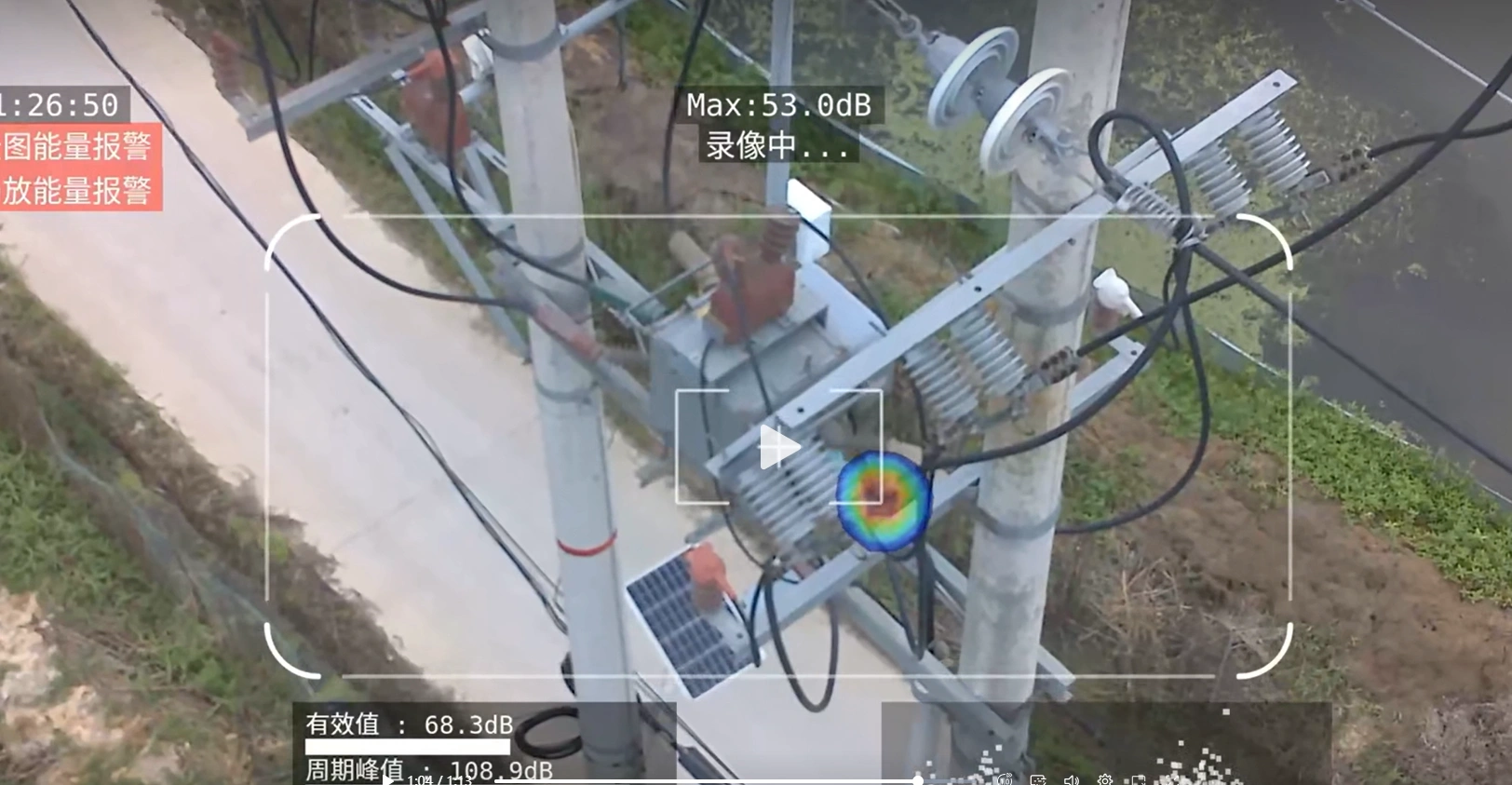
For example, an AI model could simultaneously determine:
- A high-frequency bearing noise
- Originating from Motor #6
- While the shaft is accelerating
- Under increasing mechanical load
- Indicating early bearing fatigue
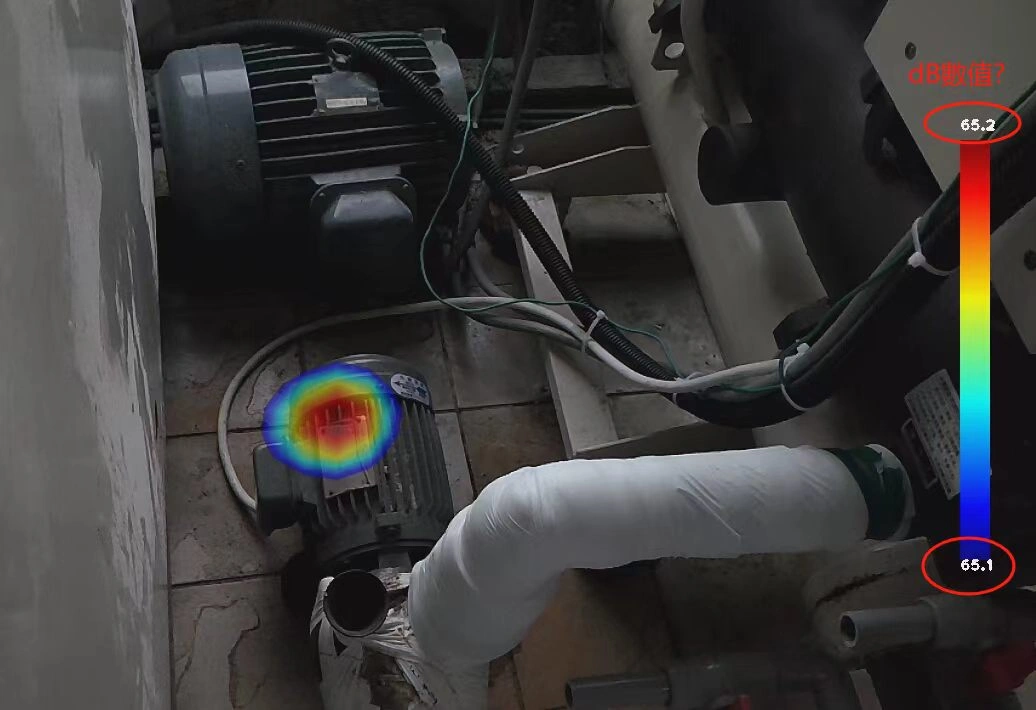
Such comprehensive diagnostics significantly reduce maintenance costs while minimizing unexpected downtime.
Why Multimodal Sensing Is Becoming the Standard for Industry 4.0
Industry 4.0 emphasizes intelligent factories where machines continuously monitor themselves.
Future industrial inspection systems will increasingly rely on integrated sensing rather than isolated devices.
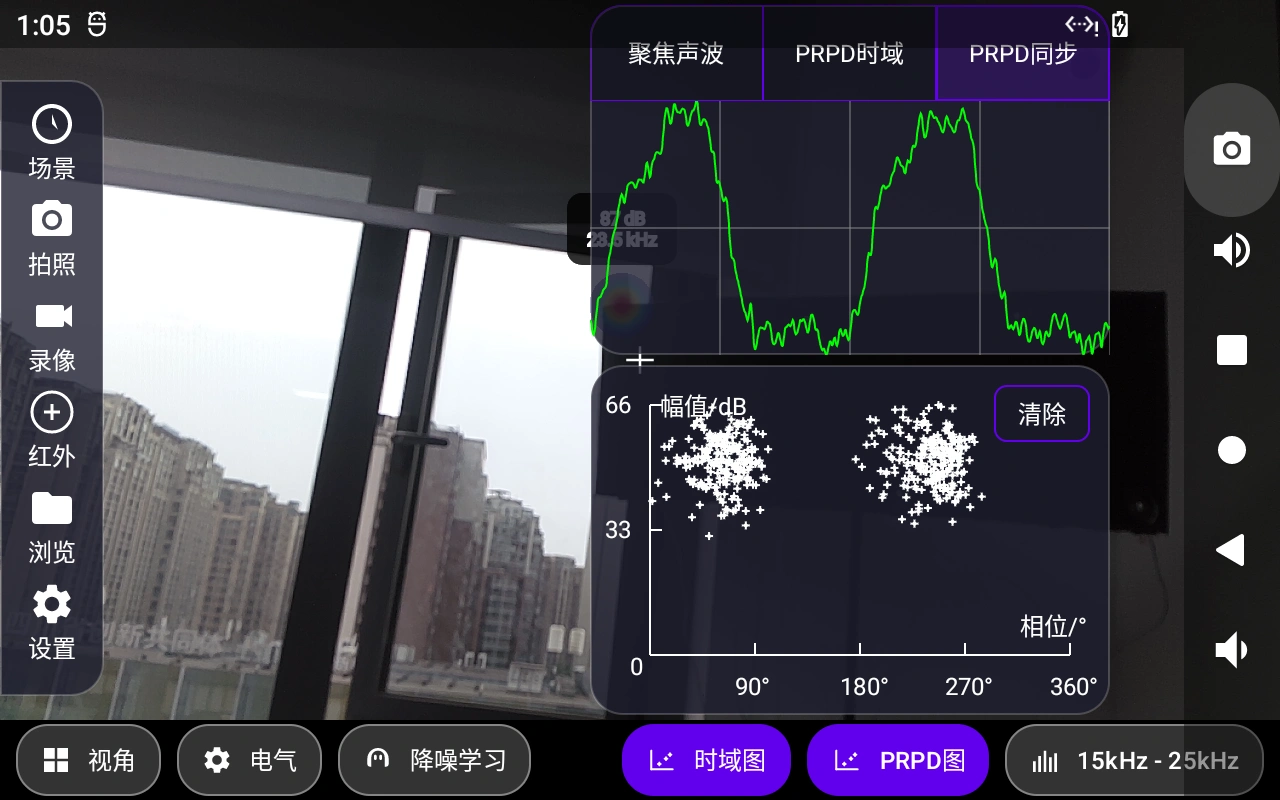
Multimodal perception supports:
- Predictive maintenance
- Autonomous inspection robots
- Smart manufacturing
- Digital twins
- AI quality inspection
- Industrial edge computing
- Intelligent surveillance
- Human-machine collaboration
Instead of relying solely on visual inspection, factories will combine acoustic, visual, thermal, vibration, radar, and environmental sensors into unified AI platforms capable of understanding complex industrial environments in real time.
Acoustic imaging is expected to become one of the most important sensing modalities within this broader ecosystem.
Latest Advances in Multimodal Sensing: From Research to Industrial Innovation
The convergence of acoustic cameras, RGB cameras, and event cameras is no longer a theoretical concept confined to academic laboratories. In recent years, universities, research institutes, and leading technology companies have made remarkable progress in multimodal perception systems capable of understanding sound, vision, and motion simultaneously.
These innovations are laying the foundation for the next generation of intelligent inspection systems, autonomous robots, and AI-powered industrial platforms.
Rather than replacing traditional sensors, researchers are demonstrating how different sensing modalities complement one another to overcome limitations that individual technologies cannot solve alone.
Acoustic Vision Is Moving from 2D to 3D
Traditional acoustic cameras primarily estimate the direction of sound sources and project acoustic heatmaps onto two-dimensional images.
While this approach is highly effective for many industrial inspections, engineers increasingly require more precise three-dimensional localization.
Consider the following scenario.
An air compressor is enclosed inside a protective cabinet.
The acoustic camera detects abnormal noise.
However, several mechanical components overlap within the same visual field.
Which component is actually producing the sound?
Conventional 2D localization may not provide a definitive answer.
Recent research has addressed this challenge by combining microphone arrays with RGB-D imaging systems.
Depth information enables AI algorithms to reconstruct the three-dimensional geometry of the environment while simultaneously estimating the spatial origin of acoustic signals.
The result is far more accurate localization, even when sound sources are partially hidden behind other structures.
This represents a significant step toward truly intelligent industrial perception.
Invisible Sound Sources Are Becoming Visible
One of the most exciting developments in recent research is the ability to localize hidden or occluded sound sources.
Instead of simply identifying where sound appears on a flat image, multimodal AI systems can infer the actual physical location of the sound source inside complex machinery.
Examples include:
- Internal bearing failures
- Enclosed gearbox defects
- Hidden air leakage
- Electrical discharge inside switchgear
- Mechanical wear behind protective covers
By combining acoustic localization with three-dimensional visual understanding, inspection systems become substantially more useful for maintenance engineers.
Instead of saying:
“The sound is somewhere here.”
The system can indicate:
“The abnormal sound originates from the rear bearing housing of Pump No. 3.”
This level of precision significantly reduces troubleshooting time.
AI Is Learning to Understand Sound and Vision Together
Traditionally, acoustic processing and computer vision evolved as separate research fields.
Today, artificial intelligence is bringing them together.
Modern multimodal learning models simultaneously analyze:
- Acoustic signals
- RGB images
- Motion information
- Temporal relationships
- Spatial geometry
Instead of processing each sensor independently, AI learns how they correlate.
For example:
An increase in bearing noise may occur simultaneously with:
- Increased shaft vibration
- Higher rotational speed
- Small changes in gear alignment
- Increased operating temperature
- Slight movement detected by the event camera
By combining all available evidence, AI can identify complex failure patterns much earlier than conventional monitoring systems.
Event-Based Vision Is Accelerating Industrial AI
One of the fastest-growing research directions involves event-based vision.
Unlike conventional cameras that repeatedly capture complete image frames, event cameras report only brightness changes.
This seemingly simple difference dramatically reduces redundant information while preserving extremely fast motion.
Researchers have demonstrated that combining RGB and event data significantly improves:
- Object detection
- Object tracking
- Human activity recognition
- Robot navigation
- Simultaneous Localization and Mapping (SLAM)
- Dynamic scene reconstruction
Industrial inspection benefits from exactly the same principles.
Fast-moving equipment that appears blurred in RGB images remains sharply represented in event data.
When synchronized with acoustic localization, moving sound sources become much easier to track.
Sensor Fusion Is Transforming Digital Twins
Digital Twins have become one of the defining technologies of Industry 4.0.
A digital twin continuously mirrors the condition of physical equipment using real-time sensor information.
Historically, digital twins relied primarily on:
- Vibration sensors
- Temperature sensors
- Pressure sensors
- PLC data
- Vision systems
Today, acoustic imaging is becoming an increasingly valuable data source.
Acoustic information often reveals early-stage faults that remain invisible to other sensors.
When combined with RGB imaging and event-based motion detection, digital twins gain a far more comprehensive understanding of machine health.
Future digital twins will not simply visualize equipment.
They will also:
- Listen to machines
- Observe machine motion
- Understand abnormal operating behavior
- Predict failures before they occur
Industrial Applications of Multimodal Acoustic Imaging
The practical value of multimodal sensing extends across nearly every industrial sector.
Below are some of the most promising application areas.
Predictive Maintenance
Predictive maintenance remains one of the largest markets for acoustic imaging technology.
Equipment rarely fails without warning.
Long before catastrophic breakdowns occur, machines begin producing subtle acoustic signatures.
Examples include:
- Bearing wear
- Gear tooth defects
- Belt slippage
- Pump cavitation
- Air leakage
- Valve leakage
- Electrical arcing
Acoustic cameras identify these abnormalities at an early stage.
RGB cameras determine which machine component is affected.
Event cameras capture the dynamic behavior leading to failure.
Together they provide a complete diagnostic workflow.
Instead of simply detecting abnormal sound, maintenance teams understand:
- Which equipment is affected
- Where the fault is located
- How the fault evolves over time
Smart Manufacturing
Modern production lines increasingly depend on AI inspection systems capable of operating continuously without interrupting production.
Multimodal sensing enables:
- Continuous equipment monitoring
- Automated quality inspection
- Production anomaly detection
- Robot-assisted maintenance
- Intelligent process optimization
Acoustic imaging can identify abnormal machinery sounds while visual sensors verify product quality and equipment status.
The combination significantly reduces unplanned downtime.
Robotics and Autonomous Machines
Industrial robots must perceive their surroundings using more than vision alone.
Future robots need the ability to:
- Detect human voices
- Identify alarm sounds
- Localize machine faults
- Track moving equipment
- Navigate dynamic environments
Multimodal sensing provides this capability.
Acoustic cameras detect sound sources.
RGB cameras recognize people and objects.
Event cameras capture rapid movement.
Together they enable more intelligent robot behavior.
Applications include:
- Autonomous Mobile Robots (AMRs)
- Automated Guided Vehicles (AGVs)
- Warehouse robots
- Inspection robots
- Service robots
- Humanoid robots
Electrical Power and Energy Infrastructure
Electrical equipment often generates ultrasonic emissions before visible failures occur.
Typical inspection targets include:
- High-voltage switchgear
- Transformers
- Substations
- Circuit breakers
- Power distribution cabinets
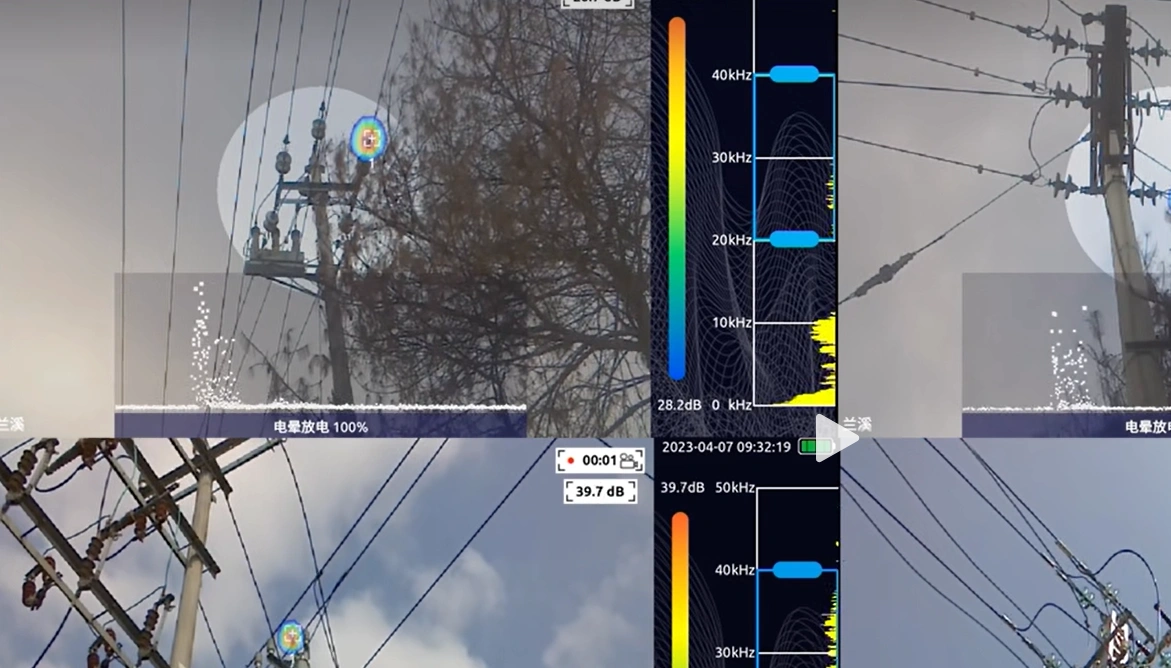
Acoustic cameras can identify:
- Partial discharge
- Corona discharge
- Arc discharge
- Gas leakage
RGB cameras provide visual documentation.
Event cameras remain effective under changing outdoor lighting conditions.
This combination improves inspection safety while reducing manual inspection requirements.
Renewable Energy
Wind farms and solar power stations cover enormous geographical areas.
Routine inspection is both labor-intensive and expensive.
Multimodal sensing enables:
- Wind turbine gearbox monitoring
- Generator inspection
- Blade condition assessment
- Cooling fan diagnostics
- Inverter monitoring
Autonomous inspection robots and UAVs equipped with acoustic imaging systems can perform routine inspections with significantly greater efficiency.
Railway and Transportation
Railway systems generate enormous amounts of acoustic information.
Wheel defects, bearing wear, rail damage, and braking abnormalities all produce characteristic sound signatures.
Acoustic imaging helps identify:
- Wheel flats
- Bearing defects
- Brake abnormalities
- Rail joint problems
RGB cameras identify vehicle numbers.
Event cameras accurately capture high-speed train movement.
Together they provide comprehensive railway inspection capabilities.
Smart Cities and Public Safety
Urban environments are becoming increasingly sensor-rich.
Future intelligent cities will combine multiple sensing modalities to improve safety and infrastructure management.
Potential applications include:
- Traffic monitoring
- Public infrastructure inspection
- Emergency response
- Crowd safety
- Environmental noise monitoring
- Utility maintenance
Instead of relying solely on video surveillance, multimodal systems provide situational awareness through both sound and vision.
How SISTC Enables Next-Generation Acoustic Imaging Solutions
As industries embrace multimodal perception, hardware platforms must become more flexible, scalable, and AI-ready.
At SISTC, we specialize in developing advanced MEMS microphone arrays, acoustic imaging modules, and intelligent sensing solutions that provide a solid foundation for next-generation industrial inspection systems.
Our solutions are designed for seamless integration with RGB cameras, event cameras, AI processors, and edge computing platforms, enabling OEM customers to accelerate product development while reducing system complexity.
Key capabilities include:
- High-performance MEMS microphone array modules
- Real-time beamforming and sound source localization
- Acoustic imaging for predictive maintenance
- AI-ready audio front-end hardware
- Embedded signal processing for edge AI applications
- Flexible OEM/ODM customization
- Support for robotics, industrial automation, smart manufacturing, and intelligent sensing platforms
Whether you are developing an autonomous inspection robot, an AI-powered monitoring system, or a custom industrial acoustic camera, SISTC provides the core sensing technologies required to build reliable and scalable solutions.
Explore our Acoustic Imaging & Intelligent Sensing solutions:
The Future of Multimodal Perception: Beyond Seeing and Hearing
Industrial sensing is entering a transformative era. Over the past two decades, machine vision has enabled factories to “see.” Acoustic imaging has empowered engineers to “hear.” Event-based vision has introduced the ability to perceive motion with unprecedented temporal precision.
The next decade will no longer be defined by individual sensing technologies but by how effectively they work together.
Future intelligent systems will not simply detect isolated signals. Instead, they will continuously interpret relationships between sound, motion, appearance, temperature, depth, vibration, and environmental conditions to build a comprehensive understanding of the physical world.
This shift represents the evolution from single-sensor inspection to multimodal perception.
For industrial AI, this means:
- Earlier fault detection
- Higher diagnostic confidence
- Fewer false alarms
- Reduced maintenance costs
- Increased production uptime
- Smarter autonomous systems
The factory of the future will not rely on one “smart sensor.” It will rely on multiple intelligent sensors working as one.
Acoustic Imaging in the Era of Embodied AI
Artificial Intelligence is evolving rapidly from software that analyzes data to systems capable of interacting with the physical world.
Autonomous inspection robots, collaborative robots (cobots), service robots, and intelligent mobile platforms all require comprehensive environmental awareness.
Human beings naturally combine hearing and vision.
When we hear an unusual sound, we instinctively look toward its source.
Future robots will operate in exactly the same way.
An intelligent robot may:
- Hear abnormal bearing noise.
- Visually identify the machine.
- Track moving components.
- Determine fault severity.
- Recommend maintenance actions.
- Report findings to a cloud management platform.
This level of perception requires multimodal sensing.
Acoustic cameras, RGB cameras, and event cameras will become complementary components of future robotic perception systems.
Why MEMS Microphone Arrays Will Become Even More Important
The rapid development of multimodal AI significantly increases the importance of MEMS microphone array technology.
Modern microphone arrays provide far more than audio recording.
They enable:
- Beamforming
- Direction of Arrival (DOA) estimation
- Sound Source Localization (SSL)
- Acoustic imaging
- AI voice interaction
- Environmental awareness
- Intelligent machine diagnostics
As AI algorithms continue to improve, the value of high-quality acoustic data will continue to increase.
Future intelligent systems will increasingly depend on accurate, synchronized, low-noise microphone arrays capable of working alongside visual sensors.
Choosing the Right Acoustic Imaging Platform
Selecting an acoustic imaging solution involves more than microphone count.
Engineers should evaluate several key factors:
Microphone Array Design
Array geometry directly influences localization accuracy, frequency response, and beamforming performance.
Synchronization Accuracy
Microphone synchronization becomes increasingly important when integrating RGB cameras and event cameras.
Beamforming Algorithms
Advanced adaptive beamforming produces higher spatial resolution and better noise suppression.
AI Compatibility
Modern platforms should support AI frameworks for sound classification, anomaly detection, and predictive maintenance.
System Integration
Industrial applications increasingly require compatibility with:
- RGB cameras
- Event cameras
- Thermal cameras
- Edge AI processors
- Industrial Ethernet
- ROS
- Embedded Linux
Choosing a scalable platform today reduces future development costs.
Why OEM and System Integrators Are Moving Toward Modular Acoustic Platforms
Many equipment manufacturers are no longer developing complete acoustic imaging systems from scratch.
Instead, they integrate modular sensing platforms into their existing products.
This approach offers several advantages:
- Faster product development
- Lower engineering costs
- Proven acoustic performance
- Easier AI integration
- Flexible customization
- Shorter time to market
For robotics companies, industrial automation providers, machine vision integrators, and predictive maintenance solution developers, modular acoustic sensing significantly reduces technical complexity while accelerating commercialization.
Frequently Asked Questions (FAQ)
What is an acoustic camera?
An acoustic camera combines a MEMS microphone array with beamforming algorithms to visualize sound sources in real time, helping engineers quickly identify the location of abnormal noise.
How does an acoustic camera work?
Multiple synchronized microphones capture sound simultaneously. Beamforming algorithms calculate the time and phase differences between microphones to estimate the sound source location and generate an acoustic heatmap.
What is beamforming?
Beamforming is a signal processing technique that focuses on sounds arriving from a specific direction while suppressing unwanted noise from other directions.
What is Sound Source Localization (SSL)?
Sound Source Localization determines the direction or position of a sound source using multiple microphones and advanced signal processing algorithms.
What industries use acoustic cameras?
Typical industries include:
- Manufacturing
- Automotive
- Energy
- Electrical utilities
- Railway
- Aerospace
- Oil & Gas
- Robotics
- Research laboratories
Can acoustic cameras detect compressed air leaks?
Yes.
Compressed air leaks generate characteristic ultrasonic noise that acoustic cameras can detect quickly, even when leaks are too small to be identified visually.
Can acoustic cameras detect electrical partial discharge?
Yes.
Acoustic imaging is widely used for identifying corona discharge, partial discharge, and electrical arcing in substations, transformers, and switchgear.
What is an event camera?
An event camera is a bio-inspired vision sensor that records only changes in brightness rather than capturing full image frames, enabling ultra-fast motion detection with very low latency.
Why combine acoustic cameras with RGB cameras?
RGB cameras identify objects and provide visual context, while acoustic cameras locate sound sources. Together, they help engineers determine exactly which component is producing abnormal noise.
Why combine acoustic cameras with event cameras?
Event cameras accurately capture high-speed motion without motion blur, making them ideal for tracking moving sound sources in industrial environments.
Can acoustic cameras be integrated into robots?
Yes.
Modern inspection robots increasingly integrate microphone arrays, RGB cameras, and AI processors to achieve comprehensive environmental perception.
What are MEMS microphone arrays?
MEMS microphone arrays consist of multiple precisely matched MEMS microphones arranged in specific geometries for beamforming, sound localization, and acoustic imaging.
What is multimodal sensing?
Multimodal sensing combines multiple sensor types—including sound, vision, motion, depth, and other modalities—to create a more complete understanding of the surrounding environment.
Why is multimodal sensing important for Industry 4.0?
Because no single sensor can capture every aspect of machine behavior. Combining acoustic, visual, and motion data significantly improves inspection accuracy and predictive maintenance.
How can OEM manufacturers accelerate acoustic camera development?
Many OEMs choose modular acoustic imaging platforms that integrate microphone arrays, beamforming algorithms, and AI-ready hardware, reducing development time and simplifying system integration.
Conclusion
Industrial inspection is evolving beyond traditional machine vision.
Acoustic imaging has already transformed how engineers detect hidden faults by making sound visible. RGB cameras continue to provide rich visual context, while event cameras introduce a new dimension of high-speed motion perception.
Together, these technologies create intelligent sensing systems capable of answering not only where a problem occurs, but also what is happening and how it evolves over time.
As Industry 4.0 advances toward autonomous factories, intelligent robotics, and AI-driven predictive maintenance, multimodal sensing will become a fundamental building block of industrial perception.
Organizations that embrace integrated sensing technologies today will be better positioned to develop the next generation of smart inspection systems, intelligent machines, and autonomous industrial solutions.
Explore SISTC’s Acoustic Imaging & Intelligent Sensing Solutions
At SISTC (Wuxi Silicon Source Technology Co., Ltd.), we develop advanced MEMS microphone arrays, acoustic imaging modules, and intelligent sensing solutions for OEM and industrial customers worldwide.
Our technologies support applications including:
- Acoustic imaging
- Sound source localization
- Predictive maintenance
- Robotics
- Smart manufacturing
- Industrial automation
- AI-powered sensing
- Edge intelligence
Whether you are building an acoustic camera, an intelligent inspection robot, or a multimodal sensing platform, our engineering team can provide customizable hardware solutions to accelerate your product development.
Explore our Acoustic Imaging & Intelligent Sensing portfolio:
Or contact our engineering team to discuss your OEM or ODM project requirements.
Recommended References
To help readers explore the broader field of multimodal sensing and acoustic imaging, consider including references to authoritative publications such as:
- He et al., SoundLoc3D: Invisible 3D Sound Source Localization and Classification, WACV 2025.
- Zou et al., High-Speed Dynamic 3D Imaging with Sensor Fusion Splatting, arXiv, 2025.
- Wu et al., CM3AE: A Unified RGB Frame and Event Pre-training Framework, 2025.
- IEEE Signal Processing Magazine – Microphone Arrays and Beamforming.
- OpenCV documentation on computer vision and sensor integration.
- Prophesee technical resources on event-based vision.
- Sony event vision sensor technical documentation.