


Far-field voice interaction has become a core requirement in modern conference systems, smart devices, robots, and AI-powered terminals.
Among different acoustic solutions, the far-field omnidirectional microphone array stands out as a practical and scalable approach for capturing human speech clearly in complex and noisy environments.
This article explores the key design principles, technical challenges, and system-level considerations behind far-field omnidirectional microphone design—and how AI-powered microphone arrays are redefining voice pickup performance.
What Is a Far-Field Omnidirectional Microphone System?
A far-field omnidirectional microphone system is designed to capture speech clearly from a distance—typically several meters away from the sound source—while maintaining uniform sensitivity in all directions.
Unlike directional microphones that rely on physical orientation, omnidirectional microphone arrays achieve spatial awareness through:
- Multiple MEMS microphones
- Array geometry and spacing
- Digital signal processing (DSP)
- AI-based speech enhancement algorithms
This architecture allows the system to detect and enhance speech regardless of the speaker’s position.
Core Challenges in Far-Field Voice Pickup
Designing a reliable far-field omnidirectional microphone array involves overcoming several acoustic challenges:
1. Environmental Noise
In real-world environments, speech is often mixed with unpredictable noise such as:
- Air conditioning
- Office chatter
- Mechanical vibrations
- Outdoor background noise
Traditional filtering methods struggle in these scenarios.
2. Reverberation and Echo
Sound reflections from walls and enclosures cause reverberation, while loudspeakers introduce echo that can severely degrade voice quality in two-way communication.
3. Distance Attenuation
Speech energy decreases rapidly with distance, making far-field voice pickup especially sensitive to signal-to-noise ratio (SNR).
Why Omnidirectional Microphone Arrays Are Preferred
Single microphones—even high-quality ones—are fundamentally limited in far-field applications.
An omnidirectional microphone array provides several advantages:
- Spatial diversity improves voice detection
- Redundant acoustic information enhances robustness
- Flexible beamforming and post-processing
- Consistent pickup regardless of speaker direction
When combined with AI algorithms, omnidirectional arrays can outperform traditional directional microphones in complex acoustic scenes.
Key Technologies in Modern Far-Field Microphone Design
AI-Based Noise Reduction
Modern far-field systems increasingly rely on deep neural network (DNN) models trained on large-scale speech datasets.
These models distinguish human voice patterns from random noise, enabling adaptive noise suppression exceeding 30 dB without distorting speech.
Acoustic Echo Cancellation (AEC)
AEC is essential for full-duplex communication.
By using a reference signal from the speaker output, the system can effectively eliminate echo before it reaches the far-end listener.
Automatic Gain Control (AGC)
AGC dynamically adjusts signal levels to ensure:
- Clear voice pickup for distant speakers
- No clipping for nearby speakers
This is especially important in conference and smart terminal applications.
Microphone Array Architecture Considerations
When designing an omnidirectional far-field microphone array, engineers should carefully consider:
- Number of microphones (e.g. 4-channel vs 8-channel arrays)
- Microphone spacing and layout
- Mechanical enclosure and acoustic chamber design
- Isolation from vibration and airflow noise
Higher channel counts generally improve spatial resolution and far-field performance, especially in large rooms.
Example: AI-Powered 8-Channel Omnidirectional Microphone Array
A practical implementation of these design principles can be seen in AI-powered microphone array modules such as the LDP6218, which integrates:
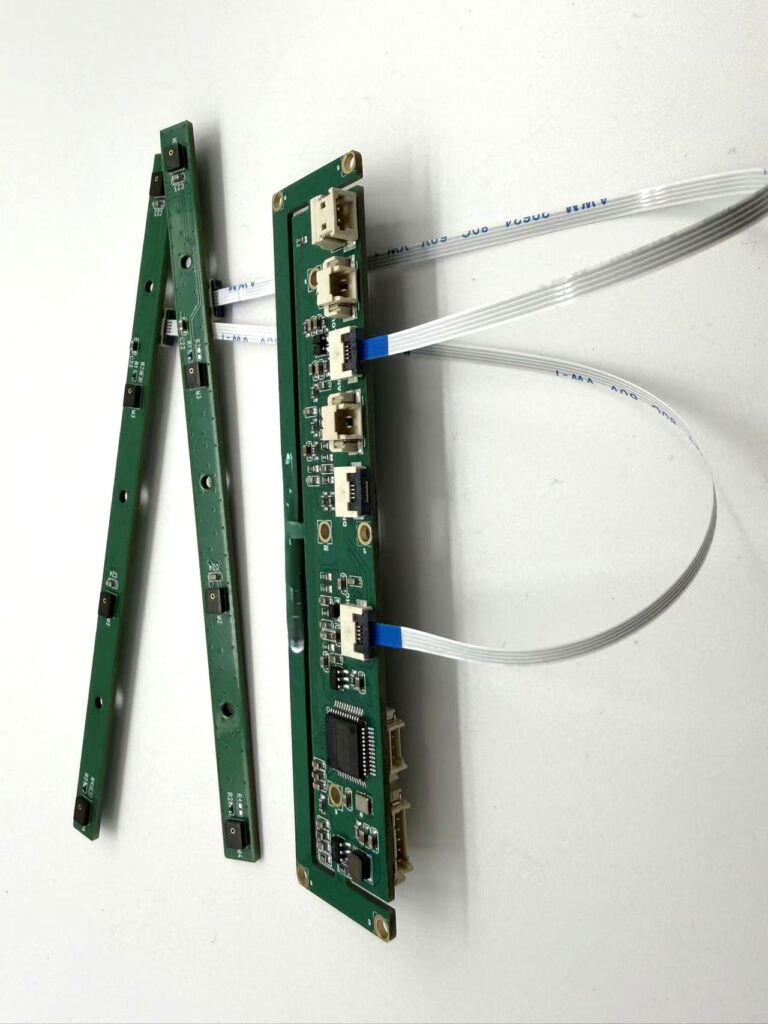
- An 8-channel omnidirectional MEMS microphone array
- AI-based noise reduction with ≥35 dB suppression
- Integrated AEC and AGC
- Far-field voice pickup up to 10 meters
- Driver-free USB Audio Device and analog audio interfaces
👉 Learn more about the product here:
AI-Powered 8-Channel Omnidirectional Far-Field Microphone Array Module
This type of module significantly shortens development cycles for OEMs by providing a ready-to-integrate hardware and algorithm platform.
Typical Applications
Far-field omnidirectional microphone arrays are widely used in:
- Conference soundbars and meeting systems
- All-in-one conferencing devices
- Conference cameras
- Smart displays and interactive terminals
- Service robots and voice-controlled equipment
As voice interaction continues to evolve, demand for reliable far-field microphone solutions will keep growing.
Conclusion
Far-field omnidirectional microphone design is no longer just about hardware.
The combination of MEMS microphone arrays, acoustic design, and AI-driven signal processing is the key to achieving clear, natural voice capture in real-world environments.
For product designers and system integrators, choosing an integrated AI microphone array solution can dramatically reduce development risk while improving voice performance.
About SISTC
Wuxi Silicon Source Technology Co., Ltd. (SISTC) has over 15 years of experience in MEMS microphones and audio system design.
We provide complete hardware-software integrated microphone solutions for conference systems, smart devices, and AI applications.
🔗 Visit us at: https://www.sistc.com