


How SISTC drives edge AI with Smart MEMS Microphone and AI MEMS Microphone Arrays
As artificial intelligence (AI) and machine learning (ML) increasingly permeate every layer of modern technology, we see a global shift — from powerful GPU-based cloud servers toward efficient, low-power, embedded edge devices. In this transformation, microcontrollers (MCUs) and TinyML technologies play a critical role.
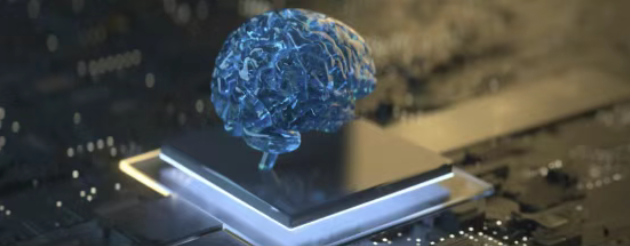
At Wuxi Silicon Source Technology Co., Ltd. (SISTC), our mission is to bring real “intelligence at the edge.” By combining MEMS microphone technology with optimized MCU/SoC designs, we enable low-power devices to perform AI/ML tasks — even when battery-powered or always-on.
AI/ML Meets MCU: The Case for Edge Intelligence
AI enables systems to perform human-like tasks: understanding language, recognizing patterns, making decisions. Traditionally, such systems rely on cloud servers or powerful GPUs. However, this paradigm is shifting.
MCUs — with their low power consumption, small form factor, and increasing processing capabilities — are becoming the foundation of edge-level AI:
- Keyword spotting and voice command detection (wake-word detection)
- Sensor fusion — merging data from multiple sensors for smarter decision making
- Anomaly detection for predictive maintenance or quality control
- Object or event detection from audio (e.g., sound classification), or even simple vision/audio fusion on constrained hardware
- Gesture or acoustic awareness (e.g., detecting presence, environmental sounds, voice direction)
By using MCUs instead of always relying on cloud or large hardware, devices gain the advantages of real-time responsiveness, low latency, privacy (on-device processing), and lower energy consumption.
Challenges: Why AI on MCU Is Hard
Deploying AI on MCUs is non-trivial because:
- Limited memory & storage — many MCUs have only a few tens or hundreds of KB of RAM and small flash storage, far less than typical ML environments. design.eccn.commcu.eetrend.com
- Constrained compute power & energy budget — tasks like convolution, matrix multiplications, or recurrent operations are compute-intensive and often unsuited to traditional MCUs.
- Real-time and low-power requirement — especially on battery-powered or always-on devices, latency and energy efficiency are critical.
- Model size and complexity — complex deep neural networks (DNNs) may simply be too large to fit on an MCU, or too heavy to run efficiently.
These challenges mean that simply transplanting a cloud-style neural network to an MCU usually doesn’t work. Instead, we need optimized models, lightweight inference engines, and hardware-aware design.
TinyML: Making On-Device AI Practical
TinyML — the practice of deploying optimized ML models on resource-constrained embedded devices — addresses these challenges. Benefits include: mcu.eetrend.com
- Local inference: no dependency on cloud — ensures privacy, reduces latency, enables offline and stable operation
- Low power consumption — suitable for battery-powered devices or always-on sensors
- Compact models — after quantization, pruning, or architecture optimization, models can run in tens to hundreds of KB of memory
- Real-time responses — enabling timely reactions (e.g., wake-word detection, event detection, anomaly warning)
Real-world TinyML applications include keyword spotting, acoustic event detection (e.g., glass break detection, cough detection), environmental monitoring, predictive maintenance, wearable health monitoring, and more. atharvgyan.com+2CSDN
Academic research supports these advances: for example, the MCUNet framework demonstrated that properly designed neural architectures and efficient inference engines can enable “ImageNet-scale inference on microcontrollers.” arXiv
SISTC’s Innovation: Audio-Centric Edge AI with MEMS Microphones
At SISTC, we apply TinyML principles specifically to audio sensing — embedding intelligence directly into the microphone front-end and edge SoC.
Smart MEMS Microphone — AI-Ready Audio Front-End
Our Smart MEMS Microphone is engineered for edge AI/ML applications:
- Ultra-low current consumption — ideal for always-on, battery-powered devices sistc.com
- High signal-to-noise ratio (SNR) and wide dynamic range — enabling reliable acoustic data for ML inference sistc.com
- Digital output (e.g., PDM) — facilitates efficient data capture by MCU or DSP without bulky analog front-ends sistc.com
- Compact form factor — fits space-constrained IoT, wearable, or smart-home devices
Paired with a TinyML-capable MCU, such a microphone becomes a front-end for local inference tasks like:
- Wake-word detection (keyword spotting)
- Audio event classification (glass breaking, cough detection, environmental sound detection)
- Always-on environmental monitoring (ambient noise, presence detection)
- Acoustic anomaly detection (for safety or maintenance)
This approach relieves the main MCU from heavy analog processing, reduces power draw, and ensures reliable, accurate sensing in real-world noisy environments.
AI MEMS Microphone Array — Spatial Audio Intelligence & Voice Awareness
For more advanced use cases — voice direction detection, beamforming, voice enhancement, multi-channel audio processing — SISTC offers AI MEMS Microphone Arrays (catalog: Sensor Module category).
Combined with embedded AI/ML inference, the array supports:
- Voice source localization (Direction of Arrival, DoA)
- Beamforming and noise suppression
- Embedded speech enhancement or audio event detection in multi-channel scenarios
- Smart home, robotics, industrial monitoring, security systems — wherever acoustic awareness and spatial audio matter
With such integration, even space- and power-constrained devices (smart speakers, doorbells, security sensors, industrial acoustic monitors) can gain advanced audio intelligence.
MCU + AI Accelerator: Enabling Efficient Inference on Edge
SISTC’s new-generation wireless SoCs and MCUs integrate dedicated matrix/vector processing units (AI/ML accelerators), enabling:
- Efficient execution of convolutional or dense layers (CNNs, MLPs)
- Accelerated inference with lower latency and lower power draw
- Support for TinyML frameworks (e.g., quantized CNNs, small speech-recognition models, audio classification)
Such SoC-level integration makes it feasible to run AI workloads like wake-word detection, acoustic event detection, and other light classification tasks on resource-constrained, battery-powered devices — fully on-device, in real time.
Conclusion — Toward a Future of Audio-enabled Edge Intelligence
As AI continues its march from cloud into every sensor and device, “intelligence at the edge” becomes more than a buzzword — it becomes essential. For audio-based applications, embedding AI into MEMS microphones and edge MCUs unlocks new possibilities: privacy-preserving always-on voice control, acoustic event detection, smart wearables, intelligent home automation, industrial sensing, environmental monitoring, and more.
At SISTC, with our Smart MEMS Microphone and AI MEMS Microphone Arrays, we are building the foundation of tomorrow’s edge AI ecosystem — enabling “hear + think at the edge.” Whether you are designing smart home devices, wearable gadgets, industrial sensors, or acoustic security systems, SISTC offers the audio-intelligent foundation you need.
If you’d like to learn more about our sensor-module offerings, please visit our Sensor Module catalog.